
Seeing a film can be a relaxed way to spend an evening in a Chinese city, especially after a day of walking, museums, or transport. Cinemas are part of ordinary local life: people meet friends, buy snacks, choose a seat, and settle in for a scheduled show. For a visitor, the biggest difference is often not the screen itself but the details around language, ticketing, entry, and the flow of a busy lobby.
Cinema systems differ by chain, city, venue, and individual screening. A little preparation makes the experience simpler: check the exact film version and time, save the ticket details, arrive with room to find the correct hall, and follow the house rules that apply that day. You do not need to understand every sign to be a considerate viewer.
Choose the Screening, Not Just the Film Title
One film may have several sessions in a day, different screen formats, and more than one language or subtitle version. Do not assume that an international title will include English subtitles, or that a familiar title will use the same audio version you saw elsewhere. The language, dubbing, subtitle, and format information shown for a particular screening is more useful than the poster alone.
Read the screening details before you pay. If the information is unclear, ask the cinema staff about that specific session rather than asking a broad question about all films. Plans can also change with release schedules, local programming, and special events, so confirm the date, time, hall, and version on the day you go.
Understand How Tickets and Seats Work
Tickets may be bought through a cinema desk, a kiosk, an official venue channel, or a local ticketing service. The available method and payment options vary. Use an official route where possible, and make sure the final ticket shows the correct session before leaving the purchase screen or counter.
Many screenings use assigned seats. Check the row and seat number carefully, save a screenshot if your ticket is digital, and keep the ticket available until you are inside. Do not move to a different seat simply because it looks empty; the person assigned to it may arrive after the lights go down.
Arrive Early Enough to Read the Lobby
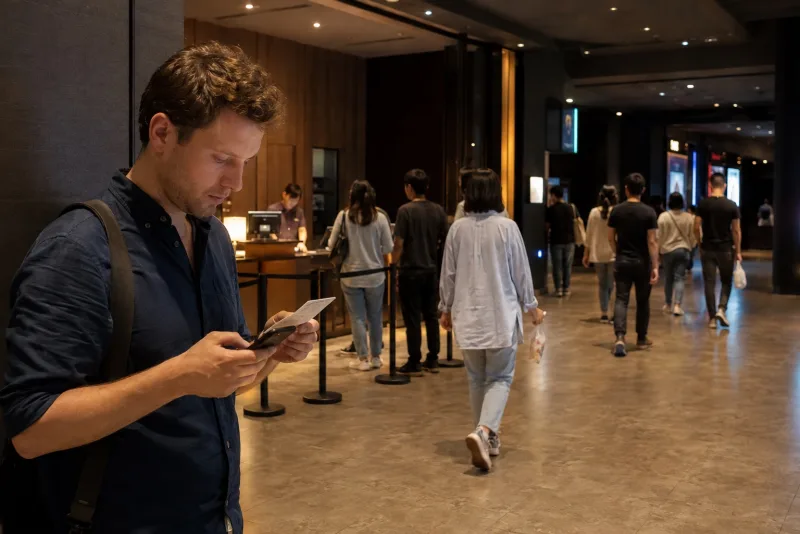
A cinema lobby can have several lines at once: ticket collection, snacks, entry scanning, and a crowd waiting for another show. Stop at the side before joining a queue and watch what each line is doing. This avoids waiting at a snack counter when you need to scan a ticket, or joining an entry line for the wrong hall.
Keep your ticket, phone, and payment method ready before you reach a counter or gate. Once your ticket is scanned, move through the entrance rather than stopping immediately in the doorway to check messages or take photos. Other people may be trying to enter the same screening behind you.
Find Your Hall and Seat Without Disrupting the Room
Screening-room entrances can look similar, especially in a large multiplex. Confirm the hall number before entering, then use the aisle light, row label, or staff direction to find your seat. If the film has already started, lower your phone brightness and move slowly so you do not block the screen for other viewers.
If someone is sitting in your assigned seat, show the ticket calmly. It may be a simple row or seat-number mix-up. Do not raise your voice or try to resolve a disagreement in the dark; ask a staff member for help if the seat issue is not immediately clear.
Snacks, Drinks, and Shared Armrests
Some cinemas sell drinks and snacks in the lobby, but their rules about outside food, containers, and strong-smelling items can differ. Check before carrying a full meal into a screening room. Choose food that is easy to manage quietly, and put wrappers away rather than leaving them in a cup holder or on the floor.
Keep your belongings within your own seat area and be mindful of shared armrests and narrow rows. A backpack on an empty neighboring seat may block someone who arrives late. Place bags under the seat or where staff indicate, without creating an obstacle in the aisle.
Phones, Photography, and the Screen
Turn your phone to silent before the trailers begin and keep the screen dim if you need to check a message. A glowing screen can distract several rows behind you, even when the room is not completely dark. Take calls outside the screening room, and return only when you can do so without interrupting other viewers.
Do not photograph, record, livestream, or use flash during a film. This can violate cinema rules and disrupt the audience. If you want an image of the lobby, signage, or a group before the screening, take it briefly and only where the cinema permits photography.
Follow the Audience Rather Than Trying to Translate Everything
You may notice that viewers react differently depending on the film, genre, age rating, and time of day. The clearest guide is the room itself: keep your voice low, avoid commenting across rows, and respond to the pace around you. A cinema is a shared viewing space, not a place to narrate the film for your travel companion.
If you do not understand the dialogue or subtitles, enjoy what you can from the visual experience rather than relying on constant phone translation. Turning on a bright screen repeatedly will make the experience worse for you and for the people nearby.
Leave Without Creating a Bottleneck
When the film ends, gather your bag, ticket, and any rubbish before standing up. Let the row begin to move rather than pushing past people who are still collecting their things. A crowded exit corridor can slow quickly if people stop in the doorway to look at their phones or wait for friends.
Once you reach the lobby, step aside before deciding where to go next. Save your hotel, metro station, or pickup point before the crowd reaches the exit. For help with short written notes and everyday communication, see how to prepare for language barriers during China travel.
Useful Questions to Save
- What language is this screening?
- Does this session have subtitles?
- Where is Hall 6?
- May I collect my ticket here?
- Is outside food allowed?
- Where is my seat?
Quick Checklist
- Check the exact screening time, hall, language, and subtitle details before buying.
- Use an official ticket route and save the final ticket information.
- Arrive early enough to identify the correct queue and hall.
- Use the assigned seat and ask staff for help with a seat mix-up.
- Keep snacks, bags, and wrappers within your own space.
- Put phones on silent and take calls outside the screening room.
- Never record, photograph, or livestream the film.
- Step aside after the screening before deciding on your next route.
The Main Point
Going to the cinema in China is usually straightforward when you focus on the exact screening and the shared space around it. Check the version before you buy, keep the entry flow moving, respect assigned seats and screen rules, and let the audience settle into the film. Those small habits turn an ordinary evening activity into an easy local experience.