
A Chinese night market can be an easy way to experience a city after the main sights have closed. Food stalls, small tables, shoppers, families, and people stopping on their way home create an atmosphere that is lively without needing a fixed itinerary. It is also a working evening space, so the most enjoyable visit comes from watching the flow before you choose a stall.
Night markets differ by city and neighborhood. One may be a formal street of long-running vendors, while another is a temporary evening cluster or a food area beside shops and transport. Go with curiosity, keep your plans flexible, and let one or two simple food stops be enough for the evening.
Choose a Market That Fits Your Evening
Pick a night market that is close to another planned stop, a metro station, or your accommodation. Opening patterns, stall numbers, and access can change with weather, season, local rules, and holidays, so check current information on the day rather than crossing the city for an uncertain schedule.
Arriving before the busiest period gives you room to see the layout and compare options. Later in the evening can be more animated, but shared seating, walkways, and popular stalls may become crowded. Save the market entrance and your next destination in Chinese before you go.
Walk Through Once Before Choosing a Stall
Start with one slow circuit. Notice whether stalls are grouped by grilled items, noodles, snacks, desserts, drinks, or ready-to-eat dishes. Look at how customers order, where they wait, and whether they pay at the stall or after sitting down.
Keep moving while you browse, especially in narrow aisles. Do not stand directly at a counter while you compare several options, and do not block the route between a stall and its tables. A second pass is often enough to return to the place that suits you.
Confirm the Price, Portion, and Order Before Cooking Starts
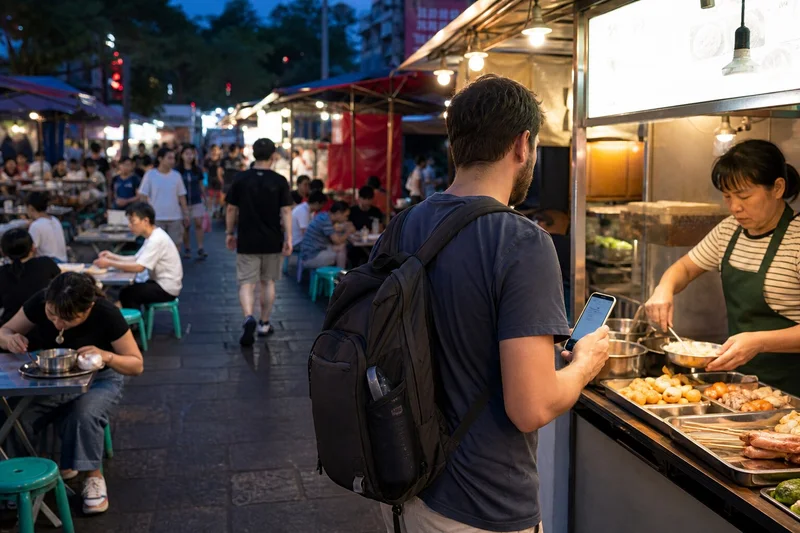
Food may be priced by portion, skewer, plate, bowl, weight, or a combination of items. Before an order is prepared, point to what you want and confirm the total price, quantity, and whether an item is spicy, cold, grilled, or served in a broth. A calculator screen or a note on your phone can make the exchange clearer.
Choose a manageable amount for a first stop. A night market is easier to enjoy when you leave room to try something later rather than ordering several unfamiliar items at once. If a price or portion is not clear, ask before the food is cooked and pay.
Read the Ordering and Pickup Flow
Some stalls take an order, accept payment, and hand over food at one counter. Others use a separate pickup point, call a number, or bring food to a table. Watch the customers ahead of you and follow the direction given by the stall rather than assuming that the nearest group is a line for new orders.
Keep your phone, payment code, and any receipt ready before reaching the counter. After paying, step aside so the next customer can order. For more detail on this everyday rhythm, see how to join a queue in China as a first-time visitor.
Use Shared Tables Thoughtfully
Stools and small tables may be shared, especially when the market is busy. Ask with a gesture or a simple question before taking an empty-looking seat, and leave room for people carrying hot dishes. Do not spread bags, coats, or purchases across several stools when others are waiting for a place to sit.
When you finish, clear disposable items to the bin or return tray indicated by the stall. If the seating is informal and there is no obvious system, follow what local customers do. A tidy table helps the next person sit down quickly.
Make Food Choices You Can Understand
A lively stall is not a reason to eat something you cannot identify or that does not fit your needs. Choose ingredients and cooking methods you understand, and ask before ordering if you need to avoid a specific ingredient. For a serious allergy or dietary restriction, make a clear translation note and use it before the order is started.
Do not rely on a quick nod as a guarantee that a dish is free from an ingredient. When communication is uncertain, select a simpler item with visible components or choose another stall. This guide covers practical preparation: food allergies and dietary restrictions during China travel.
Take Photos Without Turning a Stall Into a Set
Night markets are appealing to photograph, but vendors and diners are there to work and eat. A quick wide image of the aisle is usually enough when it does not block movement. Ask before taking a close photograph of a person, a specific order, or a stall interior.
Put the camera away when you are ordering or paying. Do not use a tripod, bright light, or a long video setup in a narrow aisle. A small, attentive purchase is more respectful than filming while other customers wait behind you.
Plan the Walk Back Before You Are Tired
Before you leave, check the next address, transport stop, and a safe pickup point. Night-market streets can look different after stalls close or crowds thin out. Keep your phone charged and take any food or drink only where it is practical to carry.
If you need a car afterward, walk to a clear pickup point rather than waiting in the middle of a busy stall lane. For a practical connection plan, read how to take taxis and ride-hailing in China as an international visitor.
Useful Questions to Save
- How much is this portion?
- Is this spicy?
- What is in this dish?
- Where do I pay and collect the food?
- May I sit here?
- May I take a photo of the stall?
Quick Checklist
- Check the market's current opening pattern before making a special trip.
- Walk through once before choosing a stall.
- Confirm price, quantity, and key ingredients before an order is cooked.
- Follow the ordering, payment, and pickup flow already in use.
- Keep shared tables, stools, and walkways clear.
- Choose food you can identify and communicate dietary needs before ordering.
- Take photos briefly and only when they do not interrupt people working or eating.
The Main Point
A Chinese night market is best enjoyed as a short local-life pause, not a race to try everything. Browse first, ask simple questions, keep the shared space moving, and choose one or two things you can enjoy comfortably. Those habits make the evening more relaxed for you and for the people around you.