
Before paying for a China trip, international travelers often want to answer one important question: is this travel company real, reachable, and clear enough to trust with my plans? That question is reasonable. A China trip may involve passport details, deposits, arrival transfers, hotel coordination, train tickets, guides, drivers, and several time-sensitive decisions.
This guide explains how to verify a China travel company before booking. It is written for travelers who want practical checks rather than vague promises. The goal is not to make every company look risky. The goal is to help you separate professional, traceable communication from unclear arrangements.
Start with the official website and consistent contact details
A real company should make it easy to understand who you are speaking with and where official communication happens. Check whether the website has a clear company name, a stable domain, an About page, a contact page, and consistent email, WhatsApp, WeChat, or phone details.
For Jiangmi Travel, the official brand site should help travelers understand the company background, support style, and booking communication. If you are comparing information, start with the About Jiangmi Travel page and the official contact page, then make sure the person communicating with you matches the official channels.

Look for clear service scope, not only attractive trip wording
A trustworthy travel company should explain what is included and what is not included. For example, private transfer, guide service, train ticket assistance, hotel coordination, airport pick-up, or emergency communication should not be mixed together in vague language.
Before booking, ask for a written outline of the service scope. If a company says it can arrange everything, ask what “everything” means in practice. Clear service boundaries are a positive sign because they reduce misunderstanding later. Jiangmi Travel explains this kind of workflow on the How It Works page.
Check whether the communication is specific
Professional communication usually includes concrete details: travel dates, number of travelers, arrival city, hotel area, passport-name requirements for tickets, payment steps, cancellation terms, and the person responsible for follow-up. Generic replies can be useful at the beginning, but the conversation should become more specific before any payment.
Be careful if the company avoids written confirmation, changes the contact person without explanation, or pressures you to pay before basic details are confirmed. Good communication should make the booking easier to verify, not harder.
Confirm payment steps before sending money
Payment clarity is one of the most important verification points. Before sending a deposit or full payment, confirm who receives the payment, what the payment covers, whether there is a written confirmation, and what happens if the trip changes or is cancelled.
A professional company should be able to explain the payment step in plain language. You should also keep copies of invoices, receipts, confirmation emails, and chat records. If you are still preparing for the broader trip, our first China trip preparation guide also covers payments, communication, transport, and official support checks.
Ask who supports you after arrival
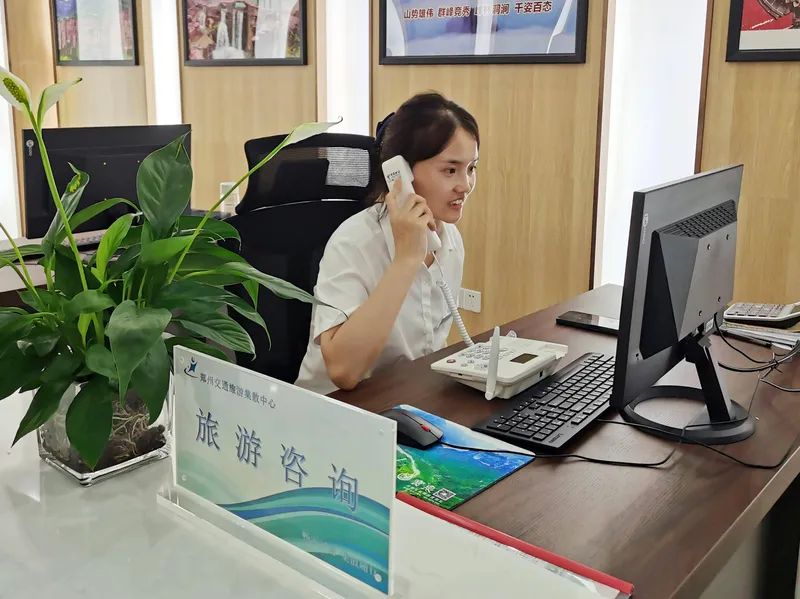
Some problems only appear after travelers arrive: a driver cannot find the correct exit, a railway station has several entrances, a hotel needs a Chinese address, or a train time needs to be checked again. A reliable travel company should explain how support works during the trip, not only before payment.
Ask whether there is a clear contact method during travel, how urgent questions are handled, and whether local staff or partners are involved. For train travel, station names and meeting points matter especially because large Chinese railway stations can be confusing for first-time visitors. Our article on using China high-speed rail as an international traveler explains why those details should be confirmed early.
Review warning signs carefully
No single sign proves that a company is unreliable, but several weak signals together should make you pause. Common warning signs include:
- No stable official website or contact page.
- Only personal chat accounts with no company context.
- Unclear payment recipient or rushed payment pressure.
- No written service scope, cancellation terms, or confirmation details.
- Promises that sound too broad, too cheap, or impossible to verify.
- Refusal to answer practical questions about timing, transfers, or support.
Use a simple verification checklist
Before booking, go through this checklist:
- Can I identify the official company name and website?
- Do the contact details match across the website, email, and chat?
- Do I understand what is included and excluded?
- Do I know who handles questions before and during travel?
- Do I have written payment and cancellation information?
- Can I save the confirmation details offline before departure?
How Jiangmi Travel approaches verification and trust
Jiangmi Travel uses its official website as the place where travelers can verify the brand, understand the support process, and contact the team through official channels. The website is not meant to be a large itinerary marketplace. It is meant to help overseas travelers confirm who they are speaking with and how official support works.
If you are not ready to book yet, that is fine. Use the website to prepare better questions first. When you are ready to discuss a specific service, contact Jiangmi Travel through the official inquiry page so the conversation starts from a traceable channel.
Bottom line
Verifying a China travel company is not about suspicion. It is about reducing uncertainty before an important international trip. Look for official channels, written service details, clear payment steps, realistic communication, and practical support after arrival. A company that can explain those points clearly is usually easier to trust and easier to work with.