
A hotel buffet gives you breakfast without decisions. A neighborhood breakfast shop gives you a different kind of morning: choose something warm from the counter, work out whether to sit or take it away, and watch the street begin its day. In Shanghai, you do not need to order a tableful of unfamiliar dishes to enjoy that experience.
This guide starts with four recognizable foods, then helps you build a small first order. It is an introduction to everyday eating, not a ranking of restaurants. Recipes, serving sizes, payment arrangements, and opening hours depend on the shop.
Four Names Worth Recognizing
Shanghai's familiar breakfast quartet consists of dabing, youtiao, cifantuan, and doujiang, often called the Four Heavenly Kings. The city government's official introduction to classic local breakfast staples describes these foods and their variations.
- Dabing: baked wheat flatbread, with sweet and savory versions.
- Youtiao: long, crisp fried dough with an airy middle. It can also appear inside another breakfast item.
- Cifantuan: a glutinous rice roll around youtiao, sometimes with pickles, sugar, or pork floss.
- Doujiang: soy milk, which may be plain, sweet, or savory. A savory bowl can contain toppings such as dried shrimp and chopped youtiao.
These are four options to recognize, not four items every visitor needs to finish at once.
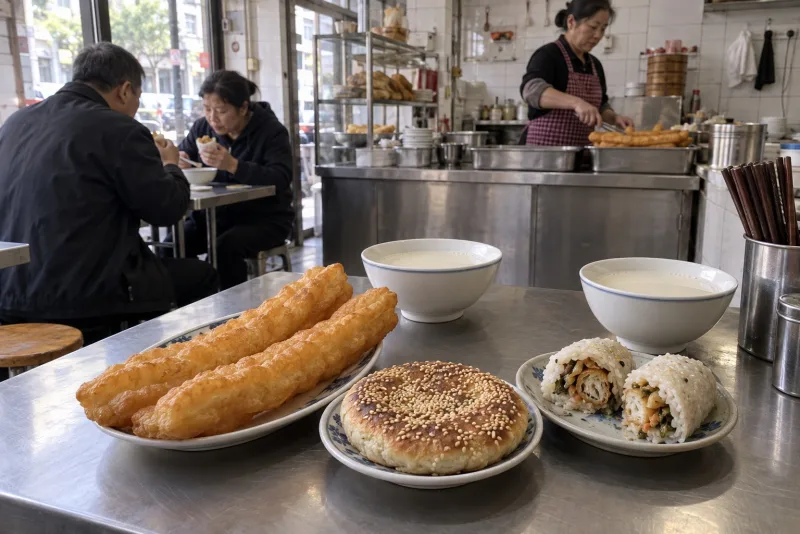
AI-generated illustration of a typical neighborhood breakfast setting. It does not depict or recommend a specific restaurant; actual dishes and portions vary.
Build a First Order Around One Solid Item
Our suggested starting point is one solid item and one drink or bowl per person, with more ordered only if you are still hungry. Look at the actual portion before deciding. A menu photograph does not tell you how substantial the food will feel.
For a simple texture comparison: two people could share a dabing and a youtiao, then choose their own soy milk. This lets you taste the bread and fried dough separately. Ask whether the shop can cut the bread if you would rather share small pieces.
For an easy takeaway: consider one rice roll, after checking its filling. Ask for it to be wrapped for eating later rather than assuming it arrives that way. Carry a napkin and keep your drink separate from your phone and travel documents.
For a slower seated breakfast: try a savory soy milk bowl with a solid item to share. Sit down before opening everything and give hot food time to cool. If the shop has no seating, choose a different place rather than balancing an unfamiliar breakfast while standing in the serving line.
Ask Which Soy Milk You Are Ordering
Do not rely on the English words “soy milk” alone. Ask whether the item is sweet, unsweetened, or savory, and whether it is served hot or cold. Pointing at someone else's bowl can communicate the appearance, but it will not tell the vendor which ingredients you want changed.
For your first order, settle the flavor before asking about temperature. Confirm whether “no sugar” is possible for that batch rather than assuming the vendor can modify a drink already prepared. A translation app works better with one short question than a paragraph of preferences.
Check the Filling, Not Just the Food's Name
A plain-looking rice roll or bowl is not an ingredient list. If you avoid meat, seafood, or another ingredient, show the vendor a precise written request and ask about the complete filling and toppings before paying. Do not describe a food as vegetarian simply because the outside is rice or the base is soy.
For an allergy, an ingredient omission alone does not establish that preparation is safe. Ask about shared equipment and choose another option if staff cannot confirm what you need. Our language preparation guide explains how to make everyday questions easier to communicate. Keep dietary information distinct from ordinary taste preferences.
Make the Counter Conversation Short and Clear
Before joining the ordering line, identify what you want, how many, and whether you are eating in. These short English prompts are useful to save in your translation app:
- One of this, please. What is the filling?
- Is this sweet, unsweetened, or savory?
- What is the price for one portion?
- For here, please. Where should I collect it?
- To take away, please.
- Do I pay here or at the other counter?
Confirm whether a displayed price refers to a piece, a portion, or a set. If breakfast comes from two different counters, check whether they take separate payments. Keep the order confirmation available until you have received everything, and step aside before opening a map or photographing your meal.
Fit Breakfast Into Your Morning, Not the Other Way Around
For a first attempt, choose a shop near your accommodation on a morning without a tight departure. Give yourself time to read the menu and correct a misunderstanding. A famous shop across town is a poor first experiment when you have a timed museum entry or train to catch.
Check current opening information with the business or your accommodation; do not assume a breakfast counter serves the same menu all day. On a departure morning, prioritize an order you understand and a route you have already checked. On a free morning, you can return for a different combination after discovering what you like.
The aim is not to complete a food checklist. Start with one manageable order, notice the contrast in textures, and leave yourself a reason to try another breakfast tomorrow.