
A hotpot menu can feel unusually large when you encounter it for the first time. You are choosing the cooking liquid, the ingredients, and sometimes your own dipping sauce, while a pot heats in the middle of the table. Once you understand those separate choices, the meal becomes much easier to order.
Start with a broth everyone can enjoy and a small selection of ingredients, then add more as you eat. The suggestions here are a practical starting point for visitors; portion sizes, menus, charges, and service vary by restaurant.
Make the Broth Your First Decision
Hotpot is not always a red, intensely spicy meal. Shanghai's official introduction to hotpot vocabulary describes choices including clear and mushroom broths. Its Huangpu hotpot guide also shows how varied restaurant soup bases can be. These are examples of variety, rather than a promise about any restaurant's current menu.
Ask which broths are non-spicy and whether a divided pot is available. If one person wants chili and another does not, separate sections can make the meal more comfortable. Confirm whether each section carries a charge and how staff recommend keeping the utensils organized.
Describe your tolerance plainly. “The least spicy option” is clearer than assuming that a restaurant's “mild” matches your usual meal at home. Ask what is in the broth if you have an ingredient restriction: a clear or mushroom-flavoured soup may still contain other ingredients.
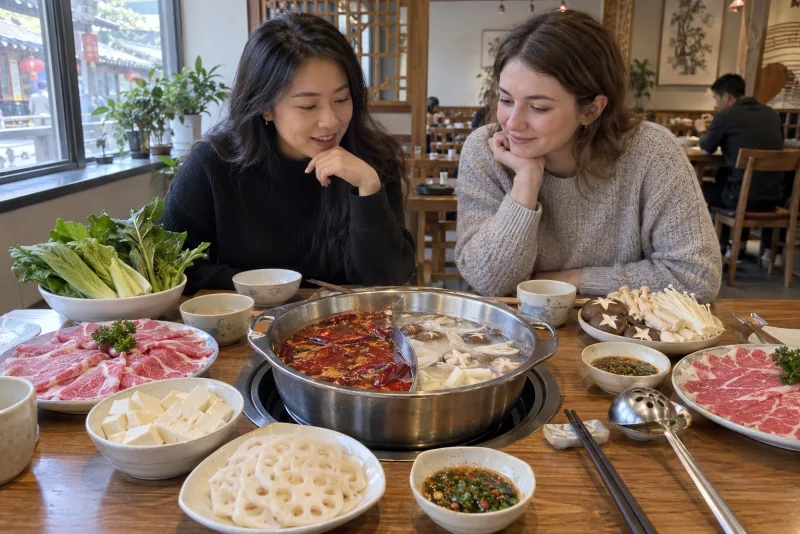
AI-generated illustration of a divided hotpot and ingredients in a typical restaurant. This image does not depict or recommend a specific business.
A Manageable First Order for Two
Our suggested first round is one protein dish you both enjoy, one tofu dish, one mushroom dish, one leafy vegetable, and one starch such as noodles or potato. This is a selection of categories, not a fixed number of plates: ask the server whether the restaurant's portions make that a sensible amount for two people.
If half portions are offered, they can help you compare textures without crowding the table. Add another dish after seeing what arrives. A photograph of a large platter may show a serving style rather than the quantity in the menu item you selected.
You can try a less familiar ingredient, but ask what it is before ordering. An English menu label or a translated photograph may not explain whether a dish is raw, already cooked, mixed with other ingredients, or served in several pieces. Pick something because you want to taste it and can understand how it is prepared.
Understand the Sauce Bowl
The small bowl beside your place is generally for dipping cooked food. Ask whether sauce is brought to the table, selected at a counter, or charged separately. If you build your own, begin with a small amount of a flavour you recognize, then adjust rather than filling the bowl with every condiment available.
Check labels or ask staff about unfamiliar sauces. Dietary restrictions need to be checked for the sauce as well as the broth and ingredients. Save a precise translated note before arriving; our dietary preparation guide can help you organize that conversation.
Ask Staff to Demonstrate the First Batch
When the dishes arrive, identify which ones still need cooking. Ask the server how to cook each unfamiliar item and whether any require staff assistance. There is no single cooking time that applies to thin meat, thick pieces, filled dumplings, vegetables, and frozen ingredients.
Use designated utensils for handling raw ingredients and separate utensils for eating. Keep raw items away from your finished food and dipping sauce. Follow the restaurant's cooking instructions, and ask for help when you cannot tell whether something is ready.
Cook in small batches so the group can keep track of what is in the pot. Adding every plate at once makes it harder to identify items and follow their cooking requirements. Leave room to move utensils without splashing broth.
Ask staff to adjust the heat or refill the broth when needed. Keep bags, loose sleeves, and phones away from the hot surface and pot edge. Let each bite cool before eating.
Read the Bill Structure Before Ordering
Confirm whether the meal is priced by individual dishes, weight, a set, or a buffet. If a menu lists small and large portions, check which one you are selecting. A tempting headline price may cover only part of the meal.
- What is the charge for the selected broth or divided pot?
- Is dipping sauce included or charged per person?
- Are any snacks, drinks, or other items charged separately?
- Does a set cover everyone at the table, and what does it include?
- Are there any other charges shown before confirming the order?
If ordering requires a QR code and your phone cannot complete the process, ask for a printed menu or staff help. Keep the order visible until the dishes arrive, particularly if you change portion sizes or remove an item.
Make the Meal Fit Your Travel Day
Choose a first hotpot meal when you have time to sit, ask questions, and eat gradually. A restaurant with a long queue is a difficult choice just before a train departure or timed attraction entry. Check the wait before committing and allow time for the bill at the end.
A useful message to save is: “This is our first hotpot meal. We would like a non-spicy option and a small first order for two. Please explain the portion sizes, extra charges, and how to cook these dishes.” Our language preparation guide can help you translate one question at a time.
Once the broth, quantities, and cooking instructions are clear, you can settle into the rhythm of the table: choose a few bites, cook them carefully, compare sauces, and order more of what you enjoy.