
A shadow puppet may be no larger than your hand, yet on a lit screen it can become a character with posture, movement, and a voice. Watching one of these performances is a way to see storytelling built from several crafts at once: cut figures, light, rods, music, singing, and the timing of the people behind the screen.
You do not have to understand every spoken word to follow what is happening. Start with the images and sounds, then look more closely at how the performance is made. This guide explains what to notice and what to check before making a special trip to a show.
First, Know What Is on the Screen
Chinese shadow puppetry uses colourful figures made from leather or paper. Performers move them with rods behind a translucent screen lit from the back, while music and singing carry the story. These are the core features described in UNESCO's account of Chinese shadow puppetry, which records its inscription on the Representative List of the Intangible Cultural Heritage of Humanity in 2011.
The screen is not simply a surface for a projected video. Watch for a puppet turning its head, changing its distance from another figure, or swinging an arm at exactly the moment a sung line or instrument changes. The apparent life of the character depends on a person controlling it in real time.
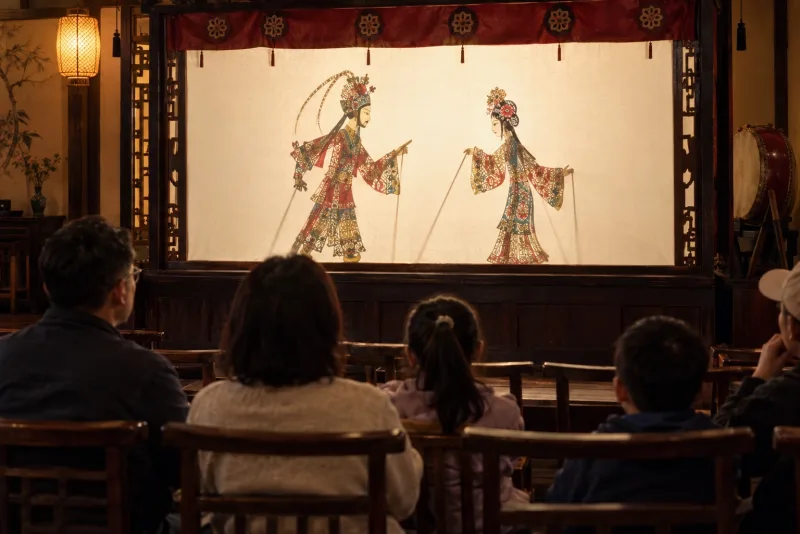
AI-generated illustration of an audience watching a shadow-puppet performance. It is not a photograph of a named troupe or venue.
Three Details That Help You Follow the Action
Look at the outline first. A character's profile, headdress, clothing, and object in hand can help you distinguish people on the screen even if you miss their names. A new figure entering or an old one changing direction often signals a shift in the story.
Then notice the joints. Some figures have multiple movable parts, so a bow, a raised sleeve, or a quick turn is a sequence of controlled movements rather than a single cutout sliding across the cloth. UNESCO describes puppeteers who can work several figures at once. You may see only the result, which is precisely the skill.
Finally, listen for changes. Voices, instruments, tempo, and repeated musical phrases can mark an arrival, an argument, a chase, or a joke. The relationship between movement and sound gives you a useful thread even when the dialogue is in a language you do not speak.
How to Enjoy a Show Without Following Every Line
If the venue provides a short story summary, read it before the lights change. Identify two or three characters and the basic conflict; there is no need to study every plot detail in advance. If there are no English subtitles, treat the performance as live theatre: follow entrances, gestures, changes in pace, and the audience's response.
Shadow puppetry has regional traditions and different kinds of staging. A museum demonstration, a short family programme, and a longer theatrical performance may give very different experiences. Ask about running time, language, subtitles, and whether the session is a full play or a craft demonstration before booking.
A useful question is: “Will I watch a complete performance, or is this a short demonstration of how the puppets work?” Both can be worthwhile; they answer different interests.
Find a Performance, Not Just an Exhibit
A museum that displays shadow puppets does not necessarily run a show every day. Check the exact date and start time with the venue's current official channel, and confirm whether admission to the exhibition includes the performance. Seasonal events and special programmes can change independently of ordinary opening hours.
For a concrete example, the Shanghai municipal government's introduction to living heritage in Minhang describes the Qibao Shadow Play Art Museum as a place combining exhibits, craft making, and live shows. Its published schedule is a starting point for research, not a guarantee for your travel date. Confirm the current programme directly before travelling across the city.
If you are comparing venues, ask whether the performance is seated, how many people can watch, and whether reservations are needed. A small screen rewards a clear view; arriving just as a group fills the front rows may change the experience more than the ticket price does.
At the Venue: Give the Screen and Performers Space
Take your seat before the show begins and silence your phone. A bright screen or raised camera can block the view of people behind you, especially in a small room. Ask whether still photography is permitted and whether flash or video recording is prohibited; rules may differ between the exhibition and the live performance.
Do not walk behind the screen or touch puppets, control rods, lights, or instruments unless staff invite you to a demonstration. These are working tools, and backstage movement can affect the show. If a performer offers a closer look afterward, take the opportunity to ask how the figure is built or which movement was hardest to coordinate.
For a visit with children, check the programme's recommended age and duration. Choose a seat where you can leave quietly if needed, and explain in advance that the figures move because people are working behind the illuminated cloth.
Questions Worth Saving
- Is there a shadow-puppet performance on this date, and at what time?
- Is the performance ticket separate from museum admission?
- How long is the show, and is it a complete story or a demonstration?
- Is there an English summary or subtitles?
- May visitors take photographs during the performance?
- Is there a chance to see the puppets or speak with the performers afterward?
Save the venue's Chinese name and address alongside those questions. Our guide to preparing Chinese addresses can help you reach the right entrance without depending on an English venue name alone.
Leave With More Than a Photograph
After the show, look again at one puppet if the venue allows it. Notice where the joints are, how colour passes through cut material, and where the rods attach. The still object may seem modest until you recall the precise movement you saw on the screen.
That is the pleasure of shadow puppetry: an apparently simple surface holds a coordinated performance by makers, puppeteers, singers, and musicians. Watch the story, but also watch the craft that makes it move.