
For international travelers, one of the simplest ways to reduce confusion in China is to prepare key addresses in Chinese before the trip. English names, translated names, map pins, hotel brand names, and station names may not always match what a driver, hotel front desk, railway staff member, or local contact expects to see. A clear Chinese address can save time at exactly the moments when you least want to improvise.
This guide explains which addresses to prepare, how to store them, and how to use them during airport transfers, hotel check-in, railway travel, attraction visits, and daily movement. It is written for practical trip planning rather than language learning.
Why Chinese Addresses Matter
China's transport and city systems are highly organized, but many everyday travel decisions still depend on exact local names. A hotel may have an English marketing name, a Chinese registered name, a branch name, and a street address. A railway station may share a city name with several other stations. An attraction may have different entrances, ticket gates, or pickup points.
When you only save an English name, you may be depending on a translation app, a search result, or a person guessing what you mean. When you save the Chinese name and address, you give local staff and drivers something much easier to verify.
Prepare These Addresses Before Departure
You do not need to translate your whole itinerary. Focus on the addresses that affect movement, identity checks, and emergency communication.
- Your first hotel name, Chinese address, phone number, and booking name.
- Airport, railway station, or cruise terminal names for arrival and departure.
- Major attraction names, especially if tickets or passport checks are involved.
- Meeting points for drivers, guides, friends, or local contacts.
- Restaurant addresses for important reservations.
- Emergency contact information, including hotel front desk and travel partner details.
- Any clinic, hospital, embassy, consulate, or insurance contact you may need to identify quickly.
For a broader offline preparation flow, read what to save offline before traveling to China.
Save the Chinese Name, Not Only the English Name
For each place, save at least three pieces of information: the English name you recognize, the Chinese name local people will recognize, and the full Chinese address. A phone number is also useful for hotels, restaurants, and meeting points.
For hotels, include the branch name if there is one. Many chain hotels have multiple locations in the same city. For railway stations, include the direction word if it appears in the name, such as North, South, East, or West. For attractions, include the entrance or gate if your ticket or meeting point depends on it.
If you are using high-speed rail, exact station names are especially important. Our guide on large railway stations in China explains why station names, gates, and exits need more attention than many first-time visitors expect.
Make the Address Easy to Show
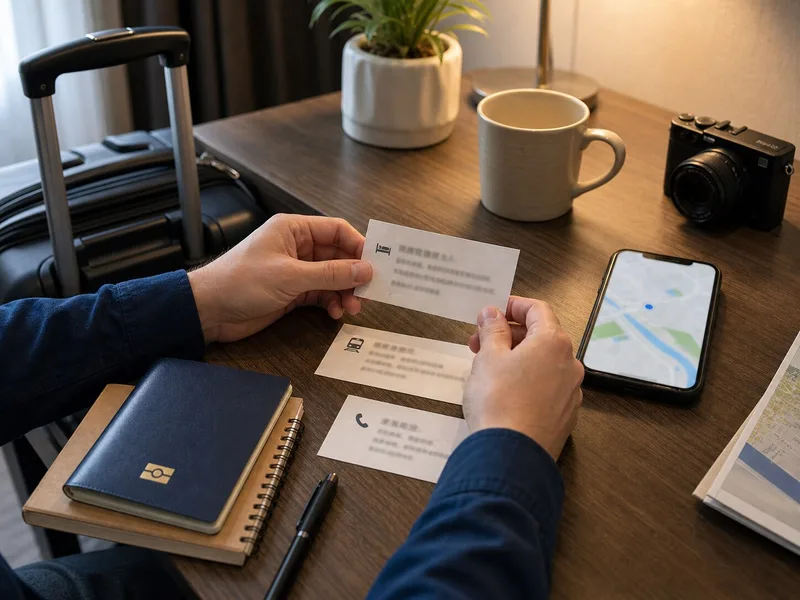
The best address is not useful if it is buried in a long email or cloud document that will not load. Save the address in a form you can show quickly. A screenshot, a small note, a printed card, or a pinned offline note is often more practical than a complicated document.
For your first hotel, prepare a simple address card with:
- Hotel English name.
- Hotel Chinese name.
- Full Chinese address.
- Hotel phone number.
- Your booking name and arrival date.
This is useful at the airport, in a taxi, at a hotel driveway, and when asking for help nearby.

Do Not Rely on One App Only
Translation and map apps are helpful, but they are not a full backup plan. App labels can differ, network access can fail, logins can expire, and search results may show a place with a similar name. If the address is important, save it in more than one format.
A good setup might include a phone note, a screenshot, a printed copy, and the address saved inside your map app. If you travel with another adult, both people should have access to the key addresses. Do not put the only copy on one phone that may run out of battery or lose connectivity.
If you are still preparing mobile data and payments, use our pre-departure checklist for your first China trip to connect address preparation with documents, internet access, and payment backup.
Check Station and Airport Names Carefully
City names are not enough for transport planning. A train ticket from Beijing South is not the same as a train from Beijing West. A transfer to Shanghai Hongqiao may be different from Shanghai Pudong. In many cities, the distance between two transport hubs can be significant.
When you book transport, compare the exact station or airport name against your hotel location and next activity. Save the Chinese name and address of both the departure point and arrival point. If someone else is arranging a pickup, send the full details rather than a casual message like "I arrive in Shanghai."
For official railway information, use China Railway 12306. Always follow the station and ticket details shown in your current booking.
Prepare Attraction and Meeting Point Details
Large attractions, museums, parks, and heritage sites may have several gates or visitor entrances. If your ticket, guide, driver, or group meeting point names a specific entrance, save that exact location. A general attraction name may send you to the wrong side of a large site.
For popular attractions, address preparation belongs together with ticket timing, passport requirements, and entry windows. Our article on popular attraction entry rules in China explains why these details should be checked before the travel day.
Use Address Cards for Driver and Front Desk Communication
When speaking with a driver, hotel front desk, railway station staff member, or restaurant host, you do not need perfect Chinese. A clear address card often does more than a long verbal explanation. Show the Chinese address, confirm the place, and keep the conversation simple.
If the driver asks a question you do not understand, use the phone number on the address card or contact the hotel. For railway stations and attractions, showing the Chinese name plus your ticket or booking screenshot can help staff point you in the right direction.
Keep Sensitive Information Separate
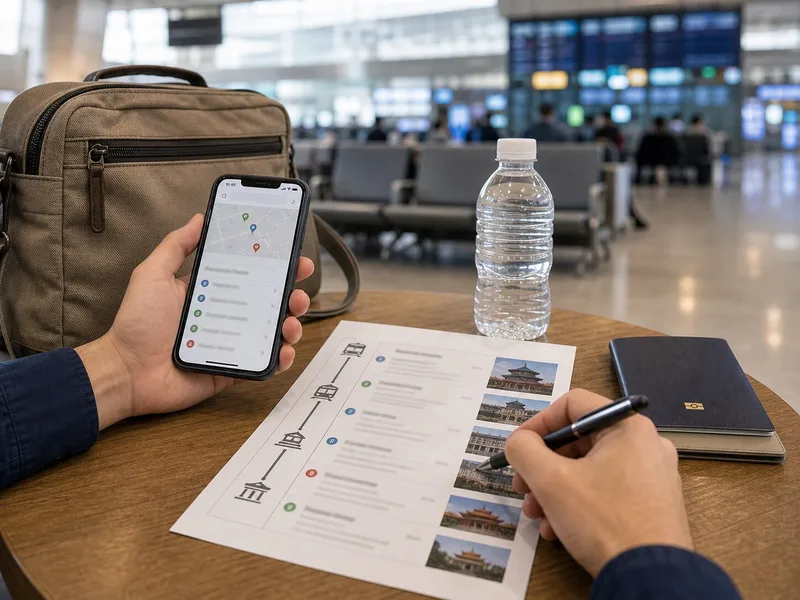
An address card should help with navigation and communication. It does not need to include passport scans, payment details, full home address, or private financial information. If you save emergency or insurance contacts, keep them in a secure note or folder rather than handing them to strangers casually.
For travel companions, it is useful to share hotel addresses, transport hubs, and meeting points. For sensitive documents, share only what is necessary and use secure storage.
A Simple Address Preparation Checklist
- Save each key place in English and Chinese.
- Include full Chinese address and phone number when available.
- Confirm exact railway station, airport, attraction gate, or meeting point.
- Save screenshots for offline use.
- Print or screenshot the first hotel address card.
- Share essential addresses with your travel partner.
- Keep sensitive personal documents separate from public address cards.
- Review tomorrow's first address each evening before travel.
Use Addresses to Make Travel Days Calmer
Chinese address preparation is a small task, but it helps many travel moments: airport arrival, taxi communication, hotel check-in, railway station navigation, attraction entry, restaurant reservations, and unexpected changes. You may never need every address you save. The point is to have the right information ready when timing, language, or connectivity becomes imperfect.
For a first trip, treat address preparation as part of the itinerary, not an extra chore. It is one of the easiest ways to make each travel day more predictable.