
The first day in China often feels simple on paper: land, collect luggage, reach the hotel, eat something, and sleep. In reality, the day can stretch because of immigration, baggage claim, airport layout, transport timing, hotel check-in rules, payment setup, and jet lag. A comfortable arrival day is not an empty day; it is a day designed to absorb friction.
This guide is for international travelers planning their first China trip. It focuses on practical pacing, not sightseeing ambition. If your first day is handled calmly, the rest of the itinerary usually starts with fewer avoidable problems.
Start With the Real Arrival Clock, Not the Flight Landing Time
The time printed on your flight booking is not the time you will be ready to start exploring. After landing, allow time for disembarkation, immigration, baggage claim, customs, walking through a large terminal, finding the correct exit, and contacting your driver, hotel, or local contact. At major airports, this can feel longer than expected when several international flights arrive close together.
If you are still choosing where to land, compare airports and onward travel carefully. Our guide to choosing the right China arrival airport explains why the airport decision affects the first day more than many travelers expect.
For arrival-day planning, treat the first two to three hours after landing as transition time, not usable sightseeing time. That buffer protects the rest of the day.

Keep the First Transfer Boring on Purpose
After a long international flight, your first transfer should be predictable. This is not the best moment to test several unfamiliar systems at once. If you are using airport taxi, ride-hailing, metro, hotel shuttle, or pre-arranged transfer, know the pickup point, Chinese hotel address, phone number, and backup plan before landing.
Save the hotel address in English and Chinese. If possible, save a screenshot too, because airport Wi-Fi, roaming, SIM activation, or app login may not work exactly when you need it. This is the same logic behind our guide on what to save offline before traveling to China.
If your flight arrives late at night, be even more conservative. A simple direct transfer to the hotel is usually better than trying to combine arrival, dinner, sightseeing, and shopping in one tired evening.
Understand Hotel Check-In Before You Arrive
Foreign travelers in China should expect the hotel to check passports and register guest information. This is normal, but it can take longer if names, room bookings, visa-free entry details, or arrival times are unclear. Keep passports, booking confirmation, and the hotel address easy to access rather than buried in checked luggage.
If you arrive before the standard check-in time, do not assume the room will be ready. Plan for luggage storage, a quiet cafe, or a short nearby walk instead of scheduling an attraction immediately. If you arrive after midnight, confirm the hotel can still receive you.
For more detail, read our China hotel check-in guide for international travelers.
Test Payment and Connectivity With Small Tasks
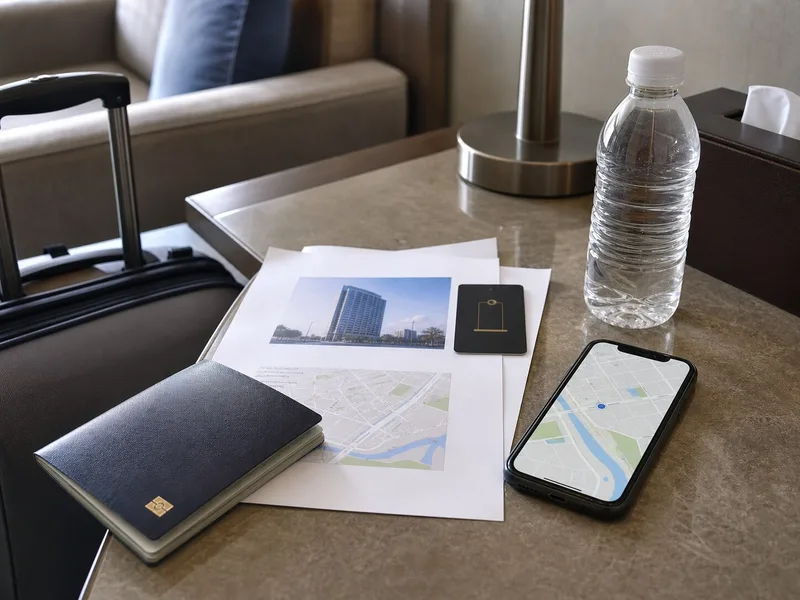
Arrival day is a good time to test the basic tools you will use for the rest of the trip: mobile data, messaging, maps, Alipay or WeChat Pay, bank cards, and cash backup. Do not wait until a crowded restaurant, train station, or attraction gate to discover that a payment app needs extra verification.
Start with low-pressure tasks. Buy water, pay for a small snack, confirm that map navigation works, send a message to your travel partner, and check whether your hotel Wi-Fi or mobile data is stable. Keep a backup payment method ready even if your preferred app works on the first try.
For the wider payment picture, use our guide to paying in China with Alipay, WeChat Pay, cards, and cash. Official payment guidance from the People's Bank of China is also worth checking before departure.
Do One Easy Meal, Not a Food Marathon
A first-night meal should be easy to reach, easy to order, and easy to leave. This does not mean it has to be boring. It means you should avoid making the first meal dependent on a long taxi ride, a complicated reservation, a late-night queue, or a restaurant in a district far from your hotel.
Choose something near the hotel, inside a mall, in a hotel-neighborhood restaurant, or at a place where ordering is straightforward. This gives you a chance to test payment, understand nearby streets, and settle in without turning dinner into another travel segment.

Do Not Schedule a Major Attraction on the Arrival Day
Popular museums, palaces, theme parks, temples, and city landmarks often require exact entry windows, passport-based tickets, security checks, walking distance, and crowd management. These are not ideal conditions for a tired first afternoon unless your flight arrives very early and you have planned the timing carefully.
If you want something on the first day, choose a flexible activity: a short neighborhood walk, a simple dinner, a riverfront stroll near the hotel, or a brief visit to a nearby shopping area. Save major attractions for the next full day, when your documents, payment, connectivity, and energy are in better shape.
Our article on popular attraction entry rules in China explains why ticket windows and passport checks deserve more attention than many first-time visitors expect.
Build a Small Arrival-Day Checklist
A useful arrival-day checklist is short. It should help you complete the basics without turning the day into another full itinerary.
- Save the hotel name, address, phone number, and booking confirmation offline.
- Keep passports and arrival documents accessible after landing.
- Know your airport-to-hotel transfer plan and backup option.
- Confirm hotel check-in time and late-arrival policy.
- Test mobile data, map navigation, and one payment method.
- Eat one easy meal near the hotel.
- Sleep early enough to protect the next day's schedule.
Use the First Day to Reduce Tomorrow's Risk
Before sleeping, spend ten minutes checking the next day. Confirm the first meeting time, transport route, weather, attraction entry window, passport requirement, and whether anything needs to be booked or saved offline. This is a better use of arrival-night energy than squeezing in one more activity.
If your trip includes high-speed rail soon after arrival, review station names and timing early. Our China high-speed rail ticket and station guide explains why station selection and passport-based tickets should not be left to the last minute.
A Practical Arrival-Day Plan
For most first-time visitors, a comfortable arrival day can look like this:
- Land and allow enough time for immigration, baggage, customs, and airport exit.
- Use the simplest transfer option to reach the hotel.
- Check in or store luggage if the room is not ready.
- Test mobile data, maps, and one payment method with a small purchase.
- Have an easy meal close to the hotel.
- Confirm tomorrow's first plan and rest.
The point is not to do less forever. The point is to let the first day do its real job: move you from international travel mode into China travel mode without unnecessary stress.
Official References Worth Checking
- National Immigration Administration for official entry and border inspection information.
- People's Bank of China: Guide to Payment Services in China.
- China Railway 12306 for official railway ticket and passenger-service information.