
Large railway stations in China can feel closer to small airports than simple train stops. A single city may have several major stations, each station may have multiple halls and exits, and high-speed rail passengers often need to pass security, find the right waiting area, and reach the gate before boarding begins. For a first-time visitor, the train ride may be easy, but the station process deserves attention.
This article explains the practical side of using large railway stations in China. It does not replace official railway instructions or the details printed in your booking, but it gives international travelers a clearer mental model before they arrive at the station.
First, Confirm the Exact Station Name
Many Chinese cities have more than one railway station. Beijing, Shanghai, Guangzhou, Xi'an, Chengdu, Hangzhou, Nanjing, Shenzhen, and many other cities may use station names that include North, South, East, West, or a district name. These are not interchangeable. Choosing the wrong station can mean a long cross-city transfer and a missed train.
Before travel day, save the station name in English and Chinese. If your booking shows the Chinese characters, keep a screenshot. If someone is helping with a transfer, send the exact station name, train number, departure time, and arrival station, not just the city name.
For broader train preparation, read our China high-speed rail ticket and station guide.
Keep the Same Passport Easy to Reach
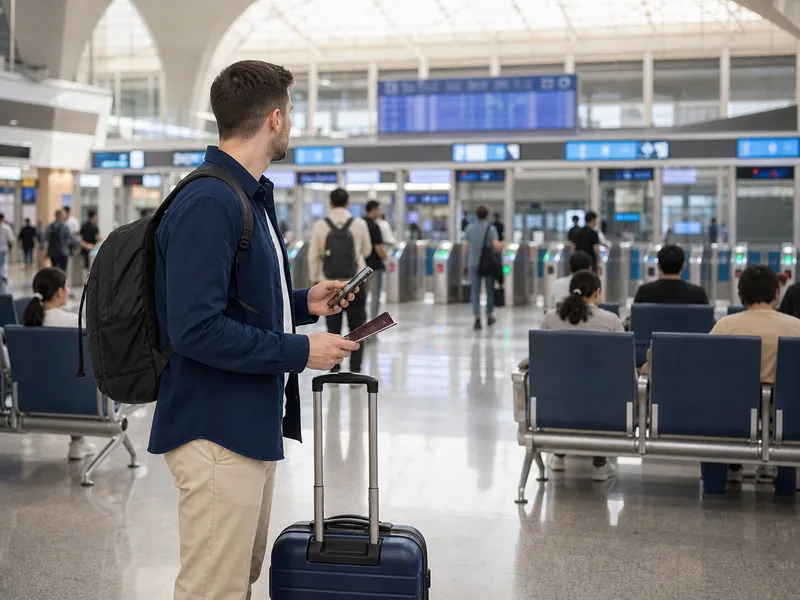
China railway tickets are tied to passenger identity. International travelers should keep the same passport used for booking easy to reach at the station. Do not pack it deep inside checked luggage or a hard-to-open bag. You may need it for station entry, identity checks, ticket questions, or staff assistance.
If your passport was renewed, replaced, or entered differently from your booking record, resolve that before travel day. Name order, document type, and passport number can matter. A small mismatch is much easier to handle before you are standing in a busy station with luggage.
If you are planning the full trip timeline, our practical China trip planning timeline explains when to confirm documents, tickets, hotels, and transport details.
Arrive Earlier Than You Would at a Small Station
At a large station, time can disappear in ordinary steps: entering the building, passing security, finding the correct floor, locating the waiting hall, checking the gate, walking to the platform, and boarding with luggage. If you are traveling during a holiday, weekend, school break, bad weather, or morning business rush, the buffer matters even more.
For a first high-speed rail trip in China, do not plan to arrive at the station at the last possible minute. A realistic buffer reduces stress and protects the rest of the itinerary. This is the same planning principle behind our article on why a realistic China itinerary needs buffer time.
Expect Security Before the Waiting Area
Railway stations in China usually have security screening before passengers enter the main waiting area. You may need to put luggage through a scanner and walk through a checkpoint. Keep power banks, liquids, small bags, and documents organized so you are not repacking everything in a crowded line.
Rules can vary by station, route, and current requirements, so follow posted instructions and staff guidance at the station. If you are carrying unusual items, medicine, large luggage, sports equipment, or anything you are unsure about, check official railway information in advance rather than guessing.
Find the Waiting Hall and Gate Before You Relax
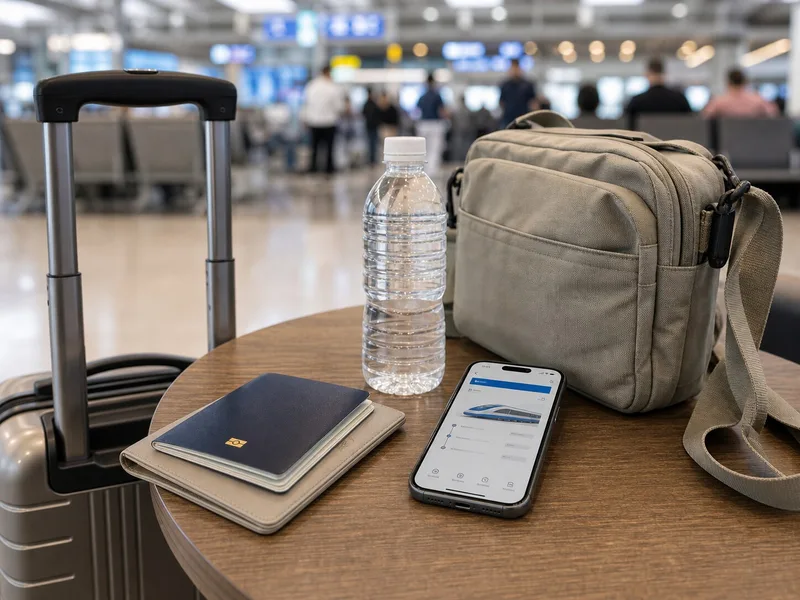
After security, do not sit down immediately just because you are inside the station. First check your train number, departure time, waiting area, and gate. Large stations can have several zones, and walking from one side to another may take longer than expected.
Boarding normally opens before departure and closes before the train leaves. The exact timing can vary, so watch the gate screen and local announcements. If you cannot read the screen clearly, show your train number and destination to station staff and ask which gate or waiting area you should use.
For first-time visitors, it is safer to treat the waiting hall as part of the travel process, not as free time for shopping far away from the gate.
Plan Your Exit Before Arrival
Large arrival stations may have several exits, taxi queues, metro connections, parking areas, ride-hailing pickup points, and underground passages. If someone is meeting you, "meet me at the station" is not enough. Agree on the station, exit number or landmark, phone contact, and backup plan.
If you are taking a taxi or metro after arrival, check which exit is closest before you leave the platform area. Walking to the wrong side of a large station can add unnecessary time, especially with luggage or tired travelers.
This is also why offline preparation matters. Save the hotel address, station name, and contact details before the train arrives. Our guide on what to save offline before traveling to China covers the same idea for hotels, transport, tickets, and contacts.
Think About Luggage and Walking Distance
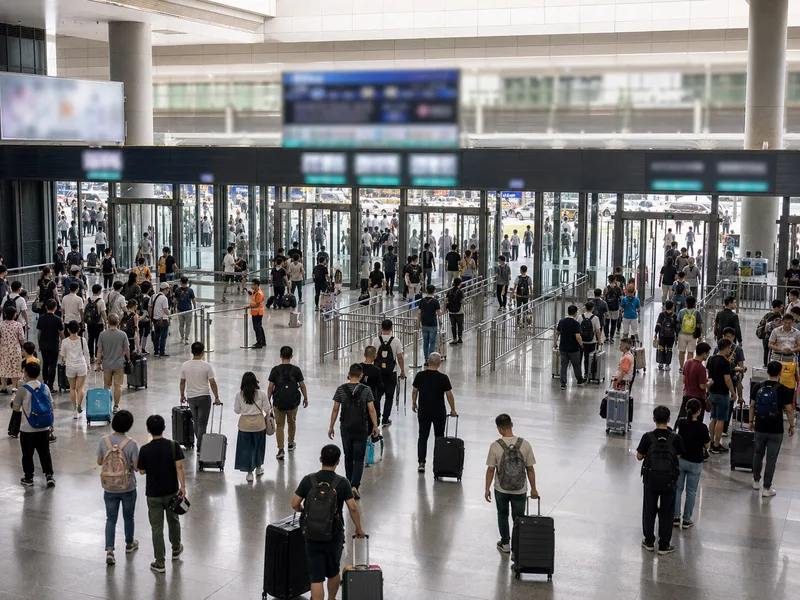
High-speed rail is convenient, but stations can involve long walks, stairs, escalators, crowded elevators, platform changes, and narrow boarding moments. Pack so you can move your own luggage without blocking other passengers or needing repeated help.
If you are traveling with children, senior travelers, large suitcases, or several transfers, leave more time and reduce unnecessary stops inside the station. The train ride may be comfortable, but getting from curb to seat and from platform to exit is part of the journey.
Do Not Build Tight Transfers Around a New Station
Large railway stations connect well with metro, taxi, buses, airports, and other trains, but that does not mean every transfer is short. A station-to-station or station-to-airport transfer should include time for walking, waiting, traffic, security, and possible delays. If you have never used that station before, avoid a transfer that only works if everything goes perfectly.
If your China itinerary includes both trains and domestic flights, compare the full door-to-door journey. Our guide High-Speed Rail or Domestic Flight: How to Decide explains how to think beyond the ticket time alone.
A Simple Large-Station Checklist
- Confirm the exact departure and arrival station names in English and Chinese.
- Keep the passport used for booking easy to reach.
- Save the train number, departure time, and destination offline.
- Arrive earlier than you would at a small station.
- Pass security before relaxing or buying food.
- Find the waiting area and gate before sitting down.
- Agree on a specific exit or meeting point after arrival.
- Leave realistic time for luggage, walking, crowds, and onward transport.
Use the Station as Part of the Itinerary
A large railway station is not just the place where the train starts. It is part of the travel day. The more clearly you handle the station name, passport, security, waiting hall, gate, exit, and onward transfer, the less likely the train segment is to create stress for the rest of the trip.
For official railway information, use China Railway 12306, the official railway ticketing and passenger-service website. Travelers should always follow the current instructions shown on their ticket, in the 12306 account, and inside the station.