
Updated on June 15, 2026. Many overseas travelers do not misunderstand China because they are careless. They misunderstand it because the country often works at a different scale, rhythm, and digital habit than they expect from trips in Europe, Southeast Asia, Japan, Korea, or North America.
This guide is about expectation gaps. It does not tell travelers what to buy or which route to choose. It explains several common assumptions that can make a first China trip feel harder than it needs to be, especially around distance, payments, language, railway stations, timing, and online advice.
If you are still building a first-trip plan, you may also find planning a first trip to China and the China travel preparation checklist useful as background reading.
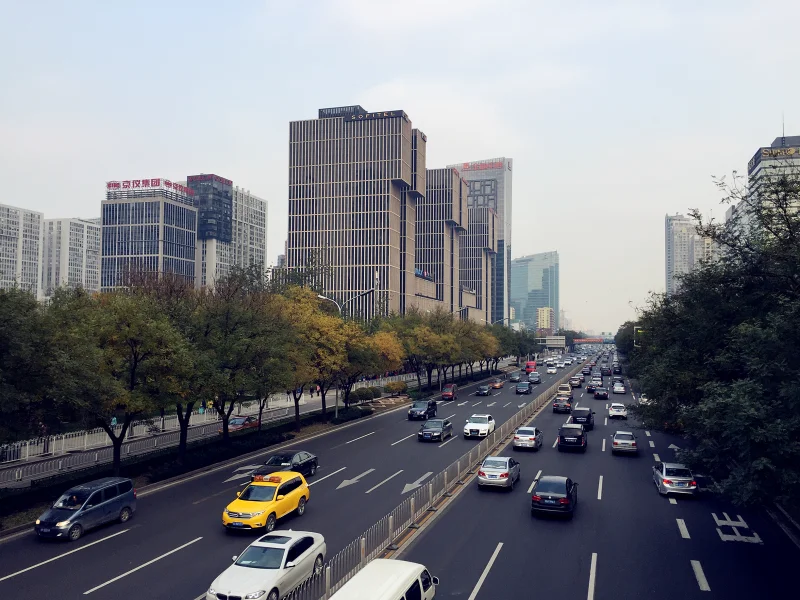
China is not one travel pattern
A common mistake is treating China as one travel pattern. A trip in Beijing does not feel the same as a trip in Shanghai, Xi'an, Chengdu, Guilin, Zhangjiajie, Yunnan, or the Greater Bay Area. City size, traffic, weather, dialects, attraction density, hotel style, railway access, and crowd rhythm can all be different.
This matters because advice that works well in one city may be only partly useful in another. A traveler who has visited Shanghai may still need fresh preparation for rural scenery areas, high-altitude regions, historic city centers, or cities where English support is less common.
Before relying on any single recommendation, ask what city, season, traveler type, and travel style it was based on. A good China plan usually starts with context, not with a universal rule.
Distances look shorter on a map than they feel in practice
On a map, two places in the same city may look close. In practice, a China city can be large enough that a short-looking route takes much longer than expected after traffic, metro transfers, security checks, walking inside a station, or finding the correct entrance.
This is especially true in major cities where airports, railway stations, museums, old neighborhoods, shopping districts, and scenic areas may sit far apart. The distance from a hotel to an attraction is not the only timing question. Travelers also need to consider the right gate, the right terminal, the right station name, and the time needed to move through large buildings.
When planning the day, leave buffers around airport arrivals, train departures, museum entry times, and dinner reservations. The practical question is not only “how many kilometers?” but “how much real movement does this require?”
A familiar app habit may not work the same way
Many travelers are used to planning with Google Maps, international messaging apps, familiar ride-hailing apps, overseas card payments, and English-language review platforms. In China, some of those tools may be limited, incomplete, slower than expected, or less useful than local alternatives.
This does not mean travel is impossible. It means travelers should prepare before arrival instead of assuming that the same phone habits will solve everything on the ground. Local maps, local payment apps, Chinese addresses, screenshots, offline notes, and a working mobile data plan can make daily movement much easier.
For practical preparation, read what to save offline before traveling to China and how international travelers can pay in China.

English support is real, but uneven
Some hotels, airports, high-speed railway stations, museums, restaurants, and popular tourist areas have English signs or English-speaking staff. Others may have limited English support, especially during busy periods or outside the main international visitor zones.
Travelers sometimes assume that “tourist city” means English will be available everywhere. That expectation can create stress when asking for directions, checking into a hotel, changing a ticket, ordering food, or explaining a small problem to a driver.
A more realistic approach is to prepare Chinese hotel names, addresses, station names, attraction names, and key screenshots in advance. Translation apps help, but they work better when the traveler already has the exact place names and booking details saved.
Large railway stations and airports need buffer time
China's transport system is efficient, but many transport hubs are big. A high-speed railway station can feel closer to an airport than a small train station in another country. Travelers may need time for ID checks, security screening, platform access, gate changes, walking distance, luggage movement, and finding the correct exit after arrival.
Do not judge a station only by the train departure time. Arriving too close to departure can be stressful, especially for first-time visitors who are still learning the station layout. After arrival, it can also take time to leave the station and meet a driver, enter the metro, or find the correct taxi area.
For more detail, see the China high-speed rail ticket and station guide and how to choose the right China arrival airport.
Payment preparation is not optional anymore
One of the biggest expectation gaps is payment. Many daily payments in China are mobile-first. International cards may work in some hotels, malls, and larger venues, but travelers should not assume that every small restaurant, taxi, convenience store, ticket counter, or local shop will accept the card they use at home.
Cash can still be useful in some situations, but it is no longer the main rhythm of daily urban payment. A traveler who prepares Alipay, WeChat Pay, mobile data, backup card options, and a small amount of cash before arrival will usually feel more comfortable than someone who waits until the first problem appears.
The important point is not whether one payment method is perfect. The point is to have more than one workable option before the trip starts.

Famous places are not always easy to fit into a day
A place can be famous, worth visiting, and still difficult to combine with too many other stops. Some attractions require reservation windows. Some need long walks after arrival. Some are crowded during weekends or holidays. Some are far from the hotel district, railway station, or airport that seems convenient on the map.
Travelers may also underestimate how tiring a day becomes when it includes early transport, luggage, heat, crowds, stairs, security checks, language questions, and several photo stops. A good day plan should leave room for meals, rest, and the slower moments that make travel feel enjoyable.
For first-time visitors, fewer places with better timing often works better than a crowded checklist.
Online advice may be outdated or context-specific
China travel information changes quickly. Payment rules, visa policies, app functions, attraction reservation systems, transport procedures, hotel practices, and tourist crowd patterns can change. A useful post from one year may still contain helpful ideas, but some details may no longer be current.
Another problem is context. Advice from a long-term resident, a backpacker, a luxury traveler, a domestic tourist, a Mandarin speaker, or a business traveler may not fit a first-time overseas visitor with limited Chinese and a short schedule.
When reading online advice, check the date, city, traveler background, season, and exact situation. Treat one person's smooth experience as a useful clue, not as proof that every traveler will have the same result.
Final thought
China travel becomes easier when expectations are realistic before arrival. The country is highly connected, fast-moving, and rewarding to explore, but it also has its own systems, scale, language conditions, payment habits, and timing logic.
The goal is not to feel worried. The goal is to prepare for the differences that are most likely to affect a first trip. When travelers understand those differences early, they can spend less energy solving avoidable problems and more attention on the places they came to see.