
A temple visit in China can be a quiet cultural stop, an important historic site, and an active place of worship at the same time. That combination is part of what makes a visit memorable, but it also means travelers should pay attention to the setting rather than treating every courtyard or hall as a photo backdrop.
There is no single rulebook for every Buddhist, Daoist, or local temple. Entry procedures, photography rules, incense practices, opening hours, and restricted areas can vary by venue. The most reliable approach is simple: follow posted signs, watch how the space is being used, and give staff and worshippers room.
Start With the Venue's Current Rules
Before you enter, check whether the site requires a ticket, reservation, bag check, or a particular entrance. A large and well-known temple may work more like a managed attraction, while a smaller neighborhood temple may have a quieter and less formal setup. Current information on the venue's official channels and signs at the gate should guide the day.
Do not rely on a past blog post, a short video, or another traveler's experience for current entry details. Opening hours, special events, and temporary access restrictions can change. For a practical way to plan time-sensitive visits, read how to plan museum and popular attraction visits in China.
Dress and Move With the Setting in Mind
Comfortable travel clothes are usually fine, but choose something reasonably modest and suitable for a religious site. A light layer can also be useful in shaded halls or changing weather. The point is not to guess at a universal dress code; it is to avoid clothing or behavior that draws attention away from the people using the space for worship.
Walk at an unhurried pace, keep bags close, and avoid blocking doorways, steps, altar areas, or narrow paths. In busy courtyards, step aside before checking a map or taking a photo so that people can pass freely.
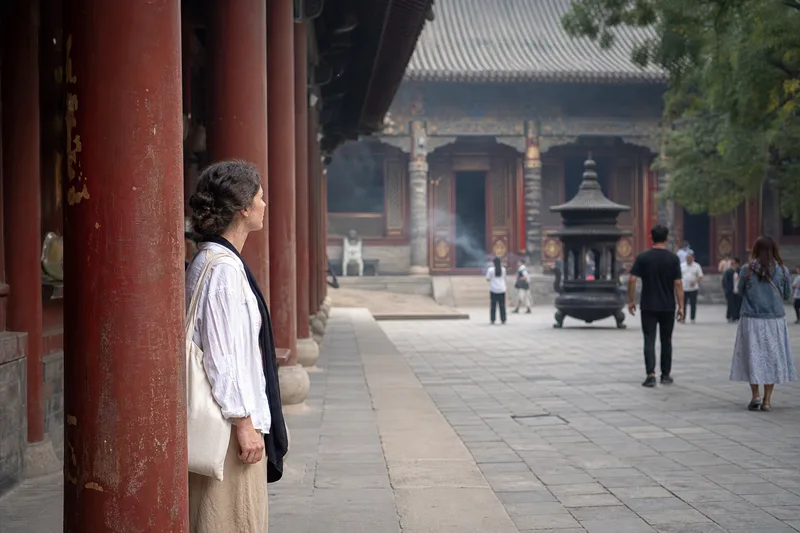
Keep Your Voice and Phone Low
Many temple grounds have a naturally quiet atmosphere even when they are popular with visitors. Use a low voice, silence phone notifications, and wear headphones if you need to listen to something. Avoid speakerphone calls, loud video playback, or making a group stop in a place where it blocks others.
If a ceremony, chanting, or individual worship is taking place, observe from a respectful distance. Do not step into a line of worshippers, ask people to move for a picture, or turn a devotional moment into a staged scene.
Photograph Architecture, Not Private Moments
Photography rules are often the clearest place where venues differ. Some outdoor courtyards may allow pictures, while halls, religious objects, ceremonies, or particular rooms may prohibit them. Look for signs, ask a staff member when unsure, and do not use flash where it is not clearly permitted.
It is also good practice to avoid close-up photos of people praying, lighting incense, or making offerings. A wide architectural image can preserve the memory without putting another visitor's private moment on display. Drones, tripods, and commercial-style shoots generally need explicit permission and should never be assumed to be allowed.
Do Not Assume How Incense or Offerings Work
Some temples provide a clear place and process for incense, while others may limit it or handle it differently for safety and crowd management. Do not light incense, place an offering, or touch religious objects unless the venue makes the procedure clear and it is appropriate for you to participate.
Watching quietly is completely acceptable. If you are interested in a practice you see, let the space remain calm and ask a staff member later rather than interrupting someone who is there to worship.
Respect Restricted Halls and Objects
Ropes, thresholds, closed doors, signs, and staff directions mark boundaries for a reason. Do not enter a hall that is closed to visitors, climb on steps or platforms for a photo, or touch statues, carvings, incense burners, bells, or ceremonial objects unless a sign specifically allows it.
When an entrance is crowded, wait your turn and follow the flow rather than looking for a shortcut. This is especially helpful in smaller halls where a few people standing in the wrong place can make the room uncomfortable for everyone else.
Plan the Visit as Part of a Real Travel Day
Temple grounds can involve uneven paving, steps, courtyards, and a fair amount of walking. Wear stable shoes, carry water in warm weather, and leave time for security or a queue at the gate. A flexible schedule is better than rushing through a place that needs slow observation.
Save the Chinese name, full Chinese address, and the correct entrance before you leave the hotel. Larger historic areas and parks may have more than one gate, so a general landmark name is not always enough for a driver or ride-hailing pickup. This preparation is explained in how to prepare Chinese addresses before your trip.
Useful Questions to Save
- Where is the visitor entrance?
- Is photography allowed in this hall?
- Is there a quiet area or a restricted area?
- What time does the temple close today?
- Where can I leave a large bag, if needed?
- Could you write the temple name and exit gate in Chinese?
Quick Checklist
- Check current entry and reservation rules before the visit.
- Follow signs, staff directions, and restricted-area markings.
- Keep your voice, phone, and photography unobtrusive.
- Do not photograph people praying or ceremonies at close range.
- Do not assume you may light incense, make an offering, or touch an object.
- Give doorways, altars, halls, and worshippers clear space.
- Save the Chinese name, entrance, and return transport plan before you go.
The Main Point
The best temple etiquette is not complicated: slow down, observe, and let the site set the tone. When travelers follow current rules, keep shared space clear, and treat worship as more than scenery, a visit can feel both welcoming and respectful.