
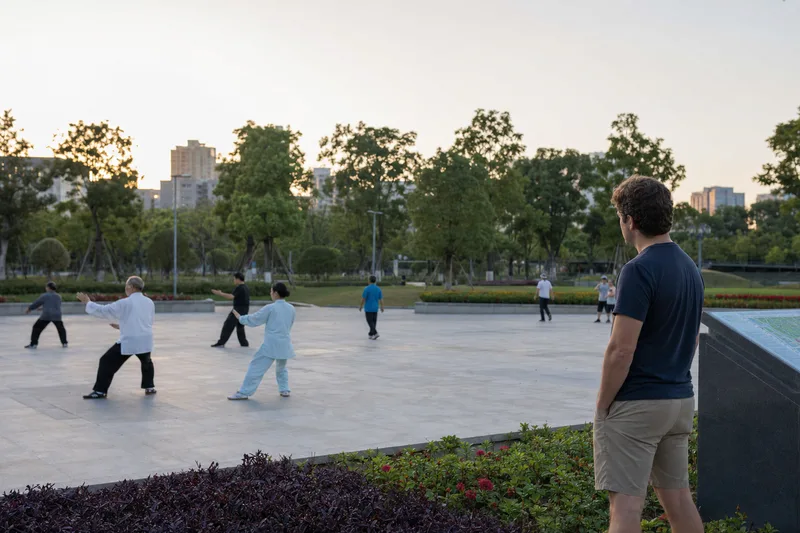
An early walk through a public park can be one of the easiest ways to see ordinary city life in China. Depending on the park, the season, and the neighborhood, you may find people walking, stretching, practicing tai chi, dancing, playing instruments, chatting, or simply sitting under the trees before the day becomes busy.
These are shared local spaces, not organized performances for visitors. The best way to enjoy the experience is to slow down, watch how the park is being used, and make room for the people whose regular routine is already happening there.
Expect Activity, Not a Quiet Empty Park
Many public parks are most active in the morning. You may see solo walkers, small exercise groups, families with children, older residents meeting friends, runners, and people using open plazas for movement or music. The exact mix changes from city to city and even from one corner of a park to another.
Do not assume an open paved area is available for visitors to stand in the middle of. If a group is exercising, keep a comfortable distance and use the edge of the space to pass. A few quiet minutes of observation will usually show where paths, activity areas, and resting spots naturally begin and end.
Watch Before You Join or Imitate
It is fine to be curious about tai chi, dance, stretching, or other group activities. But do not step into a formation, copy a routine directly beside participants, or treat the group as a backdrop for a video without a clear invitation. Most visitors will have a better experience by observing from the side and continuing their walk.
If someone warmly invites you to join, follow their lead and keep it low-key. A quick, friendly interaction can be enjoyable; turning it into a long photo session can change the atmosphere for everyone else.
Photograph the Place Without Turning People Into Props
Park architecture, trees, water, bridges, seasonal flowers, and wide scenes are usually better travel photographs than close-up images of strangers exercising. Avoid pointing a camera closely at someone who is stretching, practicing, singing, or talking with friends. If a person is clearly recognizable and you want a portrait-style photo, ask first.
Keep tripods, large cameras, drones, and long video setups out of busy paths unless the park has clearly allowed them. Signs, staff instructions, and local restrictions take priority, especially in gardens, historic parks, children's areas, and near water.
Share Paths, Benches, and Open Space
Walk on the side of a path rather than stopping abruptly in the center to check a phone. If you are traveling as a group, avoid spreading across the full width of a bridge or narrow walkway. Park users may be moving quickly, pushing a stroller, carrying groceries, or following an exercise loop they use every day.
Benches, pavilions, and shade are often practical rest spots rather than private seating areas. Keep bags compact, leave room for others when the park is busy, and avoid occupying an activity space just because it looks open for a moment.
Keep Your Own Sound Light
You may hear music, conversation, or exercise instruction from a nearby group. That does not mean every visitor should add more sound. Keep phone calls short, use headphones, and avoid playing music from a speaker while you walk. The park can hold many activities at once when each one stays considerate of the next.
If you need to make a longer call, move to a less crowded edge of the park or wait until you leave. This is especially helpful near quiet gardens, memorial areas, or places where people are reading and resting.
Use the Park as a Comfortable Part of the Day
A morning park visit works well before breakfast, after a hotel check-in, or as a low-pressure break between larger attractions. Check the weather, bring water in warm months, and wear shoes suitable for uneven paving, steps, and longer loops. Some parks are much larger than they appear on a map.
Do not build the rest of the day around a precise park activity you saw online. Rain, heat, holidays, maintenance, and local routines can change what is happening. A flexible plan makes the visit more enjoyable. For weather-aware planning, read how to plan around weather during a China trip.
Save the Right Location Details
Large city parks can have several gates, different names for gardens inside the park, and long walking distances between entrances. Save the Chinese park name, the entrance you plan to use, and a return pickup point before you leave the hotel. This matters when you are meeting a driver or using ride-hailing after a walk.
Use the exact Chinese address or gate name instead of a broad English landmark when possible. This guide explains why: how to prepare Chinese addresses before your trip.
Useful Questions to Save
- Which entrance is closest to this park area?
- What time does the park close today?
- Is this path open to visitors?
- Where is the nearest restroom?
- Where is the exit for taxis or ride-hailing pickup?
- Could you write this park gate name in Chinese?
Quick Checklist
- Arrive ready to observe a shared local space, not a staged attraction.
- Keep clear of exercise groups, paths, and busy plazas.
- Do not film or photograph people closely without permission.
- Keep calls, music, and video sound low.
- Use benches and shaded areas considerately when the park is busy.
- Check weather, walking distance, and current park rules before setting out.
- Save the Chinese name, entrance, and return pickup point.
The Main Point
A morning park visit can be a simple, memorable part of a China trip because it shows everyday rhythm rather than a scheduled attraction. Stay observant, keep the shared space open, and let the park's existing routine lead the experience.