
Updated on June 2, 2026. Hotel check-in in China is usually simple when the booking is prepared correctly. The hotel needs to see the original passport, confirm the guest identity, register the accommodation information, and submit the required information to the local public security organ. For international travelers, this is not just a hotel preference. It is part of China’s foreigner accommodation registration system.
This guide explains what foreign visitors should prepare before checking into a China hotel, why some smaller hotels may still be confused about foreign guest registration, how late-night arrival changes the plan, and what to do if you stay somewhere other than a hotel. It is written for ordinary travelers, families, senior guests, and business visitors planning a short China trip.
The core official basis is the National Immigration Administration guidance on accommodation registration for foreigners. For visitors staying outside hotels, China also started a pilot online accommodation registration service on March 20, 2026, explained by the State Council English website and the National Immigration Administration.

Why hotel check-in is different for foreign guests
When a foreigner stays in a hotel in China, the hotel is responsible for registering the guest’s accommodation information according to the hotel-industry public security rules and submitting that information to the local public security organ. This is why the front desk usually needs the original passport, not only a photo of the passport page.
For most travelers, the process is routine. The front desk checks the passport, copies or scans the identity page, checks the visa or entry record if needed, confirms the booking, and completes registration in the hotel system. The traveler does not normally need to visit a police station when staying in a properly registered hotel, because the hotel handles the accommodation registration.
This is also why the name on the booking matters. If the booking name is very different from the passport name, or if only one traveler is listed but several foreign guests arrive, check-in can take longer. Every guest should have a valid passport available.
What to prepare before arrival
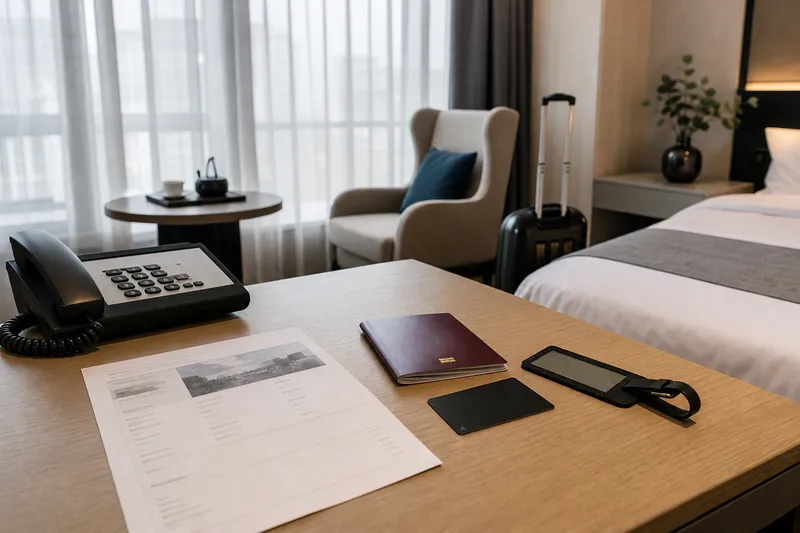
Before landing in China, keep the following items easy to access. Do not bury them at the bottom of a checked suitcase or in a phone app that requires mobile data you may not have yet.
- Original passport: each foreign guest should present the passport used for entry.
- Visa, visa-free entry record, or entry basis: hotel staff may need to check the entry stamp, visa page, or entry information.
- Hotel confirmation: keep the English confirmation and, if available, the Chinese hotel name, address, and phone number.
- Matching guest names: the main guest name should match the passport, and additional foreign guests should be included where the booking platform allows it.
- Payment method and deposit backup: prepare a card, cash, Alipay, or WeChat Pay backup because deposit practices vary by hotel.
- Arrival time note: if arriving after 10 pm, tell the hotel in advance and keep the front desk number available.
If you are still preparing the whole trip, our first China trip preparation checklist covers documents, payment, arrival, communication, and backup planning before departure.
Can foreigners stay in any hotel in China?
In major cities and international hotel chains, foreign guest check-in is usually normal. In smaller cities, budget hotels, family-run hotels, or properties that rarely receive international guests, front desk staff may be unfamiliar with passport registration or may hesitate because they are not confident using the registration system.
For practical travel planning, do not turn this into an argument at midnight. Confirm before booking, especially outside Beijing, Shanghai, Guangzhou, Shenzhen, Chengdu, Xi'an, Hangzhou, Suzhou, and other major visitor cities. A simple message is enough: “We are foreign guests and will check in with passports. Can your hotel complete foreigner accommodation registration?”
If the hotel cannot give a clear answer, choose another property. For a first China trip, the safest hotel is not always the cheapest hotel. It is the one that can handle passports, late arrival, payment, and local communication smoothly.
Late-night check-in needs extra planning
Late arrival is one of the most common reasons a smooth booking becomes stressful. A delayed international flight can push arrival into midnight or early morning. By then, the English-speaking staff member may be off duty, the hotel may think the guest is a no-show, and local transport choices may be limited.
Before a late arrival, do three things. First, tell the hotel your expected arrival time and ask them to hold the room. Second, keep the hotel address in Chinese and English. Third, arrange transport that knows the correct branch and entrance. Many hotel chains have similar names in the same city.
For delay planning, read our guide on what to do if your flight to China is delayed, changed, or arrives late. If you want someone to coordinate the airport-to-hotel handover, our China airport arrival support guide explains the practical side of pickup timing and hotel communication.
Hotel deposits, payment, and invoices
Many China hotels ask for a room deposit or card pre-authorization at check-in. The deposit can cover minibar charges, room damage, unpaid extras, or incidentals. International cards are more accepted at larger hotels, but smaller hotels may prefer Chinese payment methods or cash. Do not assume every hotel can process every foreign card.
If you use Alipay or WeChat Pay with an international card, test the setup before arrival day. If the hotel deposit is high, the app, card issuer, or hotel terminal may still create friction. Keep a backup card or some RMB cash for emergencies. Our payment guide, How International Travelers Can Pay in China, explains how Alipay, WeChat Pay, cards, and cash fit together in real travel situations.
If your trip is paid by a company, ask in advance whether you need a Chinese invoice, company name, tax number, or a normal receipt. Invoice rules are a separate accounting matter and should be handled before checkout, not after returning home.
Families, groups, and senior travelers
For families and groups, every foreign guest should bring the original passport to the front desk. Do not send only one person to check in with photos of everyone else’s passport unless the hotel has clearly confirmed that this is acceptable. Many hotels need to see each guest’s document or at least process each passport.
For senior travelers, avoid first-night hotels that require a long walk from the drop-off point, complicated elevator changes, or late-night self-check-in. A slightly more expensive hotel with a staffed front desk can be much safer than a cheaper property that is difficult to contact. If the traveler has medication, accessibility needs, or a late flight, put those details in the arrival plan.
Staying outside hotels: friends, apartments, and private homes
Hotel check-in and non-hotel accommodation are different. According to NIA guidance, foreigners who reside or stay in lodgings other than hotels, or the persons who accommodate them, should complete accommodation registration with the local public security organ within 24 hours after check-in. This can apply to staying at a friend’s home, a rented apartment, a private residence, or another non-hotel place.
On March 20, 2026, the National Immigration Administration started a pilot online accommodation registration service for foreigners residing or staying outside hotels in seven provincial-level regions: Hebei, Liaoning, Zhejiang, Hubei, Guangxi, Chongqing, and Sichuan. The official explanation says online registration can be completed through the NIA Government Service Platform, the NIA 12367 app, the NIA 12367 WeChat mini program, or the Alipay mini program, while offline registration remains available.
Do not assume that an apartment platform or a friend’s verbal assurance automatically completes the legal registration. If the stay is not a hotel, confirm who will complete the accommodation registration and how. For first-time short visitors, a proper hotel is usually simpler.

Three practical examples
- Example 1: first-time visitor landing in Shanghai at 6 pm. The guest books a downtown hotel under the passport name, keeps the Chinese address, and brings the original passport to the front desk. Check-in should be straightforward.
- Example 2: family arriving in Beijing after midnight. The family tells the hotel in advance, lists all guests where possible, keeps the hotel phone number, and arranges pickup to the correct branch. This avoids a no-show problem and reduces arrival stress.
- Example 3: traveler staying at a friend’s apartment in Chengdu. This is not a hotel stay. The traveler and host should check the current local accommodation registration method and complete registration within the required time, using the online pilot channel if applicable and available.
What to do if check-in is refused or delayed
If a hotel says it cannot receive foreign guests, stay calm and ask for the exact reason. Sometimes the issue is a booking name mismatch, missing passport, unpaid deposit, wrong branch, or staff unfamiliarity. If the hotel still cannot complete check-in, contact the booking platform, call the hotel’s main customer service line, or move to a more established hotel.
For a business trip, family trip, or senior traveler, it is better to prevent this before arrival. Use hotels that clearly handle international guests, confirm late arrival in writing, and keep a backup hotel option in the same district if traveling to a smaller city.
Hotel check-in checklist
- The hotel booking name matches the passport name.
- Every foreign guest has the original passport available.
- The hotel has confirmed it can handle foreign guest accommodation registration.
- The Chinese hotel name, address, and phone number are saved offline.
- Late arrival has been confirmed with the hotel.
- Payment and deposit backup are ready.
- If staying outside a hotel, accommodation registration responsibility is clear.
If you want Jiangmi Travel to review the arrival-to-hotel handover, late check-in risk, or first-night hotel plan, use the official contact page. We can help organize the practical travel side, while official accommodation registration follows the public security and immigration rules.
Official references
- National Immigration Administration: Regulations on Filing Accommodation Registration for Foreigners.
- State Council English website: NIA announcement on pilot online accommodation registration for foreigners staying outside hotels.
- State Council English website: Policy interpretation of online accommodation registration service.