
Entry documents are not the most exciting part of planning a China trip, but they are among the easiest things to check early and the hardest things to fix at the airport. For international travelers, the goal is not to memorize every rule. The goal is to know which documents apply to your own route, passport, visa or visa-free situation, and travel dates.
This guide gives a practical checking framework. It does not replace official immigration, embassy, consulate, airline, or visa-application guidance. Because entry rules can change, always confirm the current requirements with official channels before departure.
Start With the Passport You Will Actually Use
Begin with the physical passport you will carry, not an old scan or saved profile in a booking app. Check that the name, passport number, date of birth, nationality, and expiration date match the documents and tickets you plan to use. If you recently renewed your passport, make sure every booking and application uses the correct document number.
Keep the passport easy to reach during the travel day. It may be needed at airline check-in, immigration, hotel check-in, railway ticket checks, attraction entry, or when resolving booking questions. Do not pack it in checked luggage or in a bag that is hard to access.

Confirm Whether You Need a Visa, Visa-Free Entry, or Transit Arrangement
Do not assume your friend's entry situation applies to you. Your requirements can depend on nationality, passport type, route, purpose of visit, port of entry, length of stay, onward ticket, and current policy. Some travelers need a visa before departure. Some may qualify for a visa-free arrangement. Some may be using a transit policy. These are different situations and should be checked separately.
Use official sources first, then ask the airline or application center when the situation is unclear. Avoid relying only on social media screenshots, old forum posts, or summaries written for a different nationality.
For official entry and border inspection information, start with the National Immigration Administration. For visa application procedures in supported locations, use the Chinese Visa Application Service Center. The Chinese consular service site also provides official visa and consular information at China Consular Affairs.
Check Names Across Tickets, Hotels, and Travel Records
Name order and spelling matter. Before departure, compare the name on your passport with the name on your flight booking, visa or visa-free-related records, hotel booking, train tickets, travel insurance, and any attraction bookings that require identity information.
Small formatting differences may not always be a problem, but unresolved mismatches can slow you down when a staff member needs to verify your identity. If something looks inconsistent, ask the airline, hotel, booking platform, or relevant official channel before travel day.
This is also useful for domestic travel inside China. Our guide to China high-speed rail tickets and stations explains why passport details and station names should be checked carefully.
Keep Flight and Accommodation Details Ready
At different stages of travel, you may be asked for your arrival flight, departure or onward route, hotel address, contact phone number, or travel plan. Keep these details in one folder or phone note so you can find them quickly.
For hotels, save both English and Chinese names, the full Chinese address, and the hotel phone number. If you are still organizing this, use our guide on preparing Chinese addresses before your trip.

Prepare Supporting Documents Without Overloading Yourself
Useful supporting documents may include flight confirmations, hotel bookings, itinerary outline, invitation or event information if relevant, travel insurance, emergency contact details, and copies of key identification pages. What you need depends on your travel situation, so do not treat a generic checklist as universal.
Keep documents organized by use: entry, hotel, transport, payment, insurance, and emergency. This makes it easier to find the right file under pressure. It also reduces the chance of showing private information that is not needed for the question being asked.
Save Offline Copies, But Protect Sensitive Information
Offline copies are useful when Wi-Fi, roaming, or cloud storage does not work. Save key files on your phone and consider a printed backup for the most important details. At the same time, protect sensitive information. Do not casually share full passport scans, bank details, or private documents when a simple hotel address or booking number would be enough.
A practical setup can include:
- Passport information page saved securely.
- Visa, visa-free-related, or transit documents if applicable.
- Flight confirmations and onward travel records.
- Hotel address and phone number in English and Chinese.
- Travel insurance and emergency contact information.
- Printed or screenshot copies of the first hotel and first transfer details.
For more on offline preparation, read what to save offline before traveling to China.
Check Timing Before the Travel Day
Document checks should happen before departure week, not at the airport counter. If something is wrong with a passport, visa, booking name, hotel reservation, or onward travel record, fixing it may take time. Build this into your trip planning timeline.
A simple timing approach is to check core entry documents before booking non-refundable arrangements, re-check them after major bookings are made, and do one final review several days before departure. Our practical timeline for planning a China trip explains how document checks fit with flights, hotels, trains, attraction entries, and payment preparation.
Keep Arrival-Day Documents Accessible
On the travel day, keep a small document set within easy reach: passport, entry-related documents, flight record, first hotel address, emergency contacts, and phone access. Do not put the only copies in checked luggage. If you travel with family or a group, make sure each responsible adult knows where the documents are.
This is especially helpful when the first day is already tiring. Our arrival-day guide explains why the first few hours after landing should be kept realistic rather than overfilled with sightseeing.
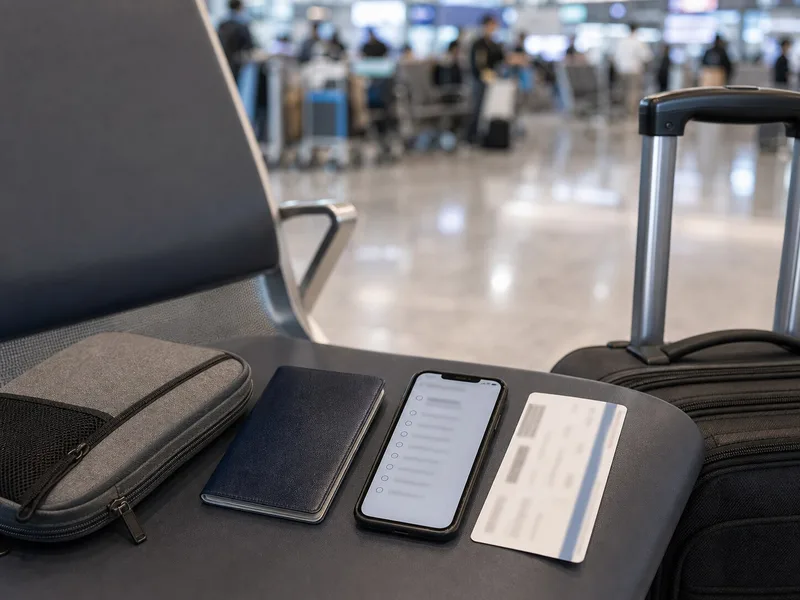
A Simple Entry Document Checklist
- Physical passport is valid for the trip and matches your bookings.
- Visa, visa-free, or transit situation has been checked against official sources.
- Flight, hotel, and onward travel details are saved offline.
- Names and passport numbers are consistent across key bookings.
- First hotel name, Chinese address, and phone number are ready.
- Supporting documents are organized by purpose.
- Sensitive files are stored securely and not mixed with public address cards.
- Final document review is done before travel day.
Use Official Sources for Final Decisions
Travel guides can help you think clearly, but they should not be the final authority for entry rules. Before departure, check the official immigration, visa, consular, airline, and application-center guidance that applies to your passport and route. If something is unclear, ask the responsible official channel rather than guessing.
The best document preparation is calm and specific. You do not need to carry every possible paper. You need the right documents for your own route, saved in a way you can access when it matters.