
A tea house can be a welcome pause in a busy China travel day: a place to sit down, slow the pace, and try tea in a setting that is more deliberate than a quick drink counter. It can also be confusing on a first visit because tea houses range from simple neighborhood rooms to refined specialty shops, scenic pavilions, and private-room venues.
There is no single tea-house routine. Menus, pricing, seating, refills, snacks, and service styles vary by city and by business. The practical habit is to look at the menu, confirm the price and ordering method, and let the staff explain the setup before you settle in.
Know What Kind of Place You Have Entered
Some tea houses are designed for a brief pot of tea and conversation. Others focus on a particular tea style, a tasting experience, live performance, a garden view, or a private room for a longer visit. A modern tea shop may work more like a cafe, while an older-style room may have a slower service rhythm.
Take a minute at the entrance to see whether there is a host, a menu board, a wait list, or a seating instruction. Do not assume every open-looking table is free, and do not assume a private room has the same price structure as an open table.
Check Pricing Before You Order
Tea may be priced by pot, by person, by a set, by the type and amount of leaves, or as part of a room or table charge. Snacks, performance tickets, private-room time, and service can also be separate. The exact system depends on the venue, so a quick confirmation prevents a surprise later.
If the menu is only in Chinese, use a translation app as a starting point and ask staff to point out the price and portion. It is better to ask one clear question before ordering than to make assumptions from a translated tea name. For wider language preparation, read how to prepare for language barriers during China travel.
Start With One Simple Choice
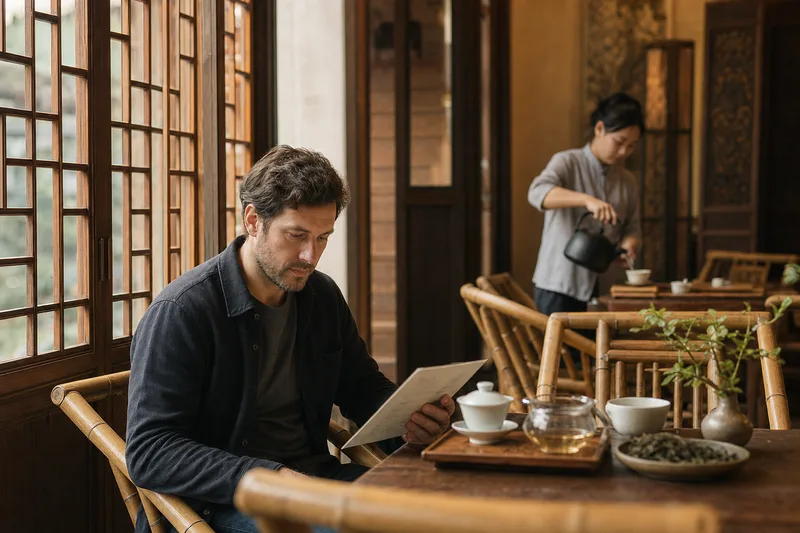
For a first visit, there is no need to order an elaborate tasting or the most expensive tea on the menu. Choose one tea that sounds appealing, ask how it is served, and give yourself time to try it. Staff may recommend a local specialty, a lighter green tea, a floral tea, an oolong, or a dark tea, but taste is personal and you do not need to understand every category to enjoy the visit.
A simple order also makes it easier to notice how the place works. You can see whether water is added to a pot, whether the leaves remain on the table, and whether the cup or gaiwan is meant to be used in a particular way.
Let the Staff Set the Tea-Service Rhythm
Tea service can be hands-on at one venue and very relaxed at another. Some places will prepare the first round, while others give you hot water and let you pour. If you are not sure what to do, wait briefly, watch the table setting, or ask for a simple demonstration.
Do not assume unlimited refills, extra hot water, or a particular brewing method is included. If you need more water, want to change tea, or are ready to leave, a polite question to staff is clearer than trying to manage unfamiliar equipment on your own.
Respect Shared and Private Space
Tea houses can be social places, but the tone is usually calmer than a busy restaurant. Keep calls short, use headphones, and avoid playing sound from a phone. If you are seated close to another table, keep bags and jackets within your own space and leave walkways clear for staff carrying hot water.
Private rooms can have minimum spending, time limits, or reservation rules. Ask before entering, especially if a door is open. In shared rooms, do not move chairs, tea trays, or decorations from another table to make a photo setup.
Take Photos Without Interrupting the Room
Tea sets, leaf displays, windows, and interior details can make good travel photographs. Before taking many pictures, check whether the venue has a photography rule, especially if there is a performance, tasting session, or a quiet private area nearby.
Avoid close-up photographs of other guests without their consent, and do not block service while trying to capture a pour. A few quiet images of your own tea and table are usually enough to remember the visit.
Plan It as a Rest Stop, Not a Rushed Errand
A tea house works best when you can stay long enough to relax rather than drinking quickly before the next reservation. Use it as a pause after a museum, a walk, or a busy market, and check the next transport step before you sit down. A longer stop can affect your meal timing, so keep the rest of the day realistic.
For a practical approach to food and timing around activities, see how to plan meals on a China travel day. Save the tea house's Chinese name and address if you may need a ride-hailing pickup afterward.
Be Ready for Payment
Before ordering, make sure you have a payment method the venue accepts. Larger tea houses may have a clear QR payment counter, while smaller places can have a different process. Do not wait until the bill arrives to discover that your usual payment method needs a backup.
Keeping more than one way to pay makes ordinary stops easier to manage. This guide covers the wider preparation: how international travelers can pay in China.
Useful Questions to Save
- How is this tea priced?
- Is the price per pot, per person, or per table?
- Is there a minimum spend or a time limit?
- Could you recommend a tea for a first-time visitor?
- May I have more hot water, please?
- How do I pay for the tea?
Quick Checklist
- Check the seating and ordering process before choosing a table.
- Confirm the price, portion, and any room or service charge before ordering.
- Start with one tea and ask staff how it is served.
- Keep bags, calls, and phone sound contained to your own space.
- Ask before entering a private room or moving into a reserved-looking area.
- Photograph your own table without disrupting staff or other guests.
- Have a payment backup and save the Chinese address for the next journey.
The Main Point
A tea-house visit is easier when you treat it as a local place with its own rhythm rather than a fixed ceremony to perform correctly. Confirm the basics, order simply, and give the tea enough time. That is usually all you need for a comfortable first experience.