
Seeing Chinese opera can be a memorable way to spend an evening in China, even when you do not understand every word of the story. The music, costume, movement, makeup, and stagecraft create an experience that is very different from a museum visit or a daytime landmark.
It also helps to arrive with the right expectation. Chinese opera includes many regional traditions, and performances can differ greatly in language, instruments, length, pacing, and presentation. A first visit does not need to be an expert lesson. It works best when you choose a format that fits your evening, check the venue's current rules, and give yourself room to observe.
Choose the Performance, Not Only the Name
Look beyond a broad label such as "opera" or "traditional show." Read the venue description for the date, start time, expected length, language support, venue location, and whether the performance is a full production, a short highlights program, a cultural introduction, or part of a dinner or tea-house experience.
A shorter program can be a comfortable first choice when your schedule is already full. A longer evening can be rewarding when you have time to settle in and want to experience a more complete work. Do not assume two listings with similar names have the same format, seating, or admission rules.
Use the Venue's Current Information
Ticket release dates, entry gates, late-arrival rules, bag checks, photo policies, and seating arrangements can change by venue and performance. Check the theatre's own official notice or ticket channel close to the visit date, rather than relying on an old social post or a general city guide.
Some performances may have a set seating time, while others allow a more relaxed arrival. Either way, aim to be at the venue early enough to find the entrance, pass any security check, collect tickets if needed, and locate your seat without walking in after the performance has started. For wider time-slot planning, read how to plan museum and popular attraction visits in China.
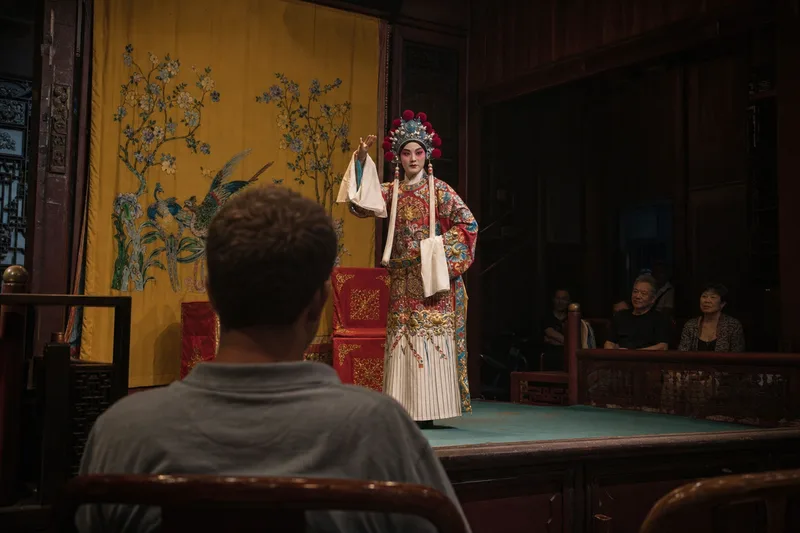
Arrive Early Enough to Settle In
Plan to arrive before the start time, especially when the theatre is inside a larger historic area, shopping complex, hotel, or cultural venue. The entrance named on a ticket may not be the most obvious door from the street. Save the Chinese venue name, address, and exact entrance in advance.
Once inside, check your row and seat before the lights go down. Keep large bags compact, silence notifications, and put anything you may need during the show within easy reach. It is easier to settle before the room becomes quiet than to search through a bag during a scene.
You Do Not Need to Understand Every Line
For a first visit, let yourself follow the visual and musical elements: entrances, gestures, costume changes, vocal energy, instruments, and the audience's response. If the venue offers a short synopsis, subtitles, a program note, or an introduction, use it as context rather than as a test you need to pass.
Stories, styles, and performance conventions can be unfamiliar at first. That is normal. A curious, patient approach is more useful than trying to decode every scene immediately. If you want a deeper understanding later, note the name of the performance and the theatre after the show, then explore that specific tradition on its own terms.
Follow the Room for Photos and Sound
Photography and recording rules vary. Some venues may allow a quick photo before the performance or during a designated moment, while others prohibit cameras, video, flash, or phone screens entirely. Follow the posted rules and staff directions, and do not assume that a phone is permitted just because another visitor has one out.
Keep the screen dark, silence the phone, and avoid talking during scenes. If you need to leave the room, wait for a natural pause when possible and use the quietest route. Do not lean into the aisle or hold a camera above other people's heads for a better angle.
Let the Audience Set the Applause Rhythm
Audience reactions can be part of a live performance. If you are unsure when to applaud, follow the people around you and the end of a musical or dramatic moment. There is no need to force a response or stay completely still if the room is clearly responding with appreciation.
What matters most is not interrupting performers or nearby guests. Keep food packaging, conversation, and moving around to a minimum once the show has begun.
Plan the End of the Evening
After a performance, many people leave at once. Decide before the curtain call whether you will walk, use the metro, call a taxi, or book ride-hailing. If the venue is in a busy district, step away from the immediate exit before searching for a car so you do not block the crowd.
Save the hotel name and Chinese address before the show, not while standing in a noisy queue afterward. For clear destination preparation, read how to prepare Chinese addresses before your trip. If you use ride-hailing, this guide can help with the basics: how to take taxis and ride-hailing in China.
Useful Questions to Save
- Which entrance should ticket holders use?
- What time does seating begin?
- Is there an English synopsis or subtitle support?
- Is photography allowed before or during the performance?
- Where is my row and seat?
- Where is the best pickup point after the show?
Quick Checklist
- Check the format, start time, length, and current venue rules.
- Save the Chinese theatre name, entrance, and return destination.
- Arrive early enough to find the seat before the show starts.
- Keep phone sound, screens, bags, and movement unobtrusive.
- Follow the venue's photo and recording policy exactly.
- Use a synopsis or subtitles as helpful context, not a requirement.
- Plan the journey home before the audience exits together.
The Main Point
A first Chinese opera visit is easier when you let the theatre guide the experience. Choose a format that fits your evening, arrive prepared, follow the room's rules, and focus on what you can see and hear. You do not need prior knowledge to have a respectful and enjoyable performance night.