
A supermarket can solve many small travel problems in one stop: water for the room, fruit for a train day, breakfast, snacks, tissues, a light layer, or an extra phone cable. For a first-time visitor, the unfamiliar part is usually not finding food. It is understanding labels, loose produce, weighing, bags, checkout, and payment without holding up the line.
The details vary by store, city, and product section. A large chain supermarket, a department-store basement, a neighborhood grocery, and a convenience store can all work differently. The useful approach is to start with a short list, watch the signs and other shoppers, and ask a simple question before a small uncertainty becomes a checkout problem.
Choose the Store That Fits the Errand
Convenience stores are useful for a quick drink, snack, basic toiletries, and a small breakfast. A larger supermarket gives you more choice for fruit, yogurt, bread, prepared food, household items, and travel supplies. A neighborhood store can be practical when you only need a few things near the hotel.
Do not expect every shop to carry the same products or accept the same payment methods. If you need a specific item, keep the Chinese name or a clear photo on your phone. A simple visual reference is often faster than trying to describe a product from memory.
Start With Packaged Items and Clear Prices
For the easiest first purchase, choose a few packaged products with a visible shelf label and a familiar size: water, juice, crackers, fruit, yogurt, or a simple snack. Check the unit, quantity, and date marking before you place an item in the basket. If you are unsure what a label means, use a translation app for the key lines rather than trying to translate every word.
When you have allergies, medical dietary restrictions, or strict religious requirements, packaging and translation alone may not be enough. Use a prepared food card and ask for help where possible. This guide explains the extra preparation: how to prepare for food allergies and dietary restrictions during China travel.
Watch How Loose Produce Is Weighed
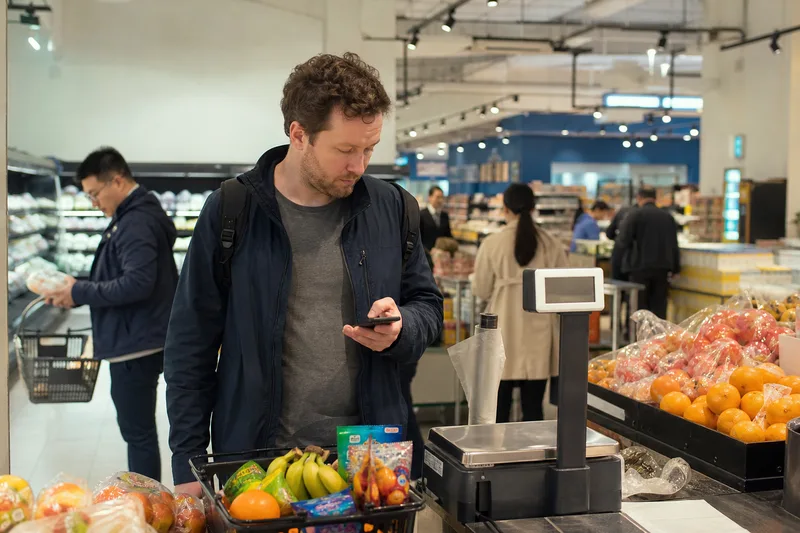
Fruit, vegetables, nuts, bakery items, and prepared foods may be sold by weight. In some stores you select the item, weigh it at a nearby station, and attach a printed label before going to the cashier. In others, staff weigh the item at the counter or checkout. The correct process is usually shown on a sign or becomes clear when you watch the next shopper.
Do not guess if there is a scale beside the display. Look for a product code, a staff member, or a label printer. If you reach the checkout without a needed label, the cashier may direct you back to the produce section, which is normal and easy to fix.
Keep Bags and the Basket Manageable
Bring a foldable bag when you expect to buy more than a few items. Some stores provide bags at checkout, while others may use a separate display or a small charge. Keep fragile fruit, hot prepared food, and cold items organized so they do not get crushed under heavier products.
If you are staying in a hotel, buy only what you can store and finish comfortably. A large package is not always practical when the room has little refrigerator space, you have an early departure, or you need to carry luggage through a station the next day.
Prepare for Checkout Before Joining the Line
Have your basket organized, phone charged, and preferred payment method ready before you reach the cashier. Some supermarkets have staffed lanes, self-checkout machines, or a mix of both. Follow the lane signs and wait until the cashier or screen indicates the next customer.
If you use self-checkout for the first time, choose a quiet moment or a staffed option instead of rushing through a busy line. A staff member can usually help with an unfamiliar barcode, scale, or payment step. Keeping phone power available also makes everyday purchases easier; see power bank and phone charging tips for China travel.
Use a Payment Backup
Payment options can differ between stores and counters. Do not assume that one app, card, or payment screen will work everywhere in the same way. Keep a backup method ready, especially for a late-evening purchase, a smaller neighborhood shop, or a first visit where you do not yet know the checkout flow.
A practical payment setup is part of smoother daily travel. For a wider overview of apps, cards, and cash backups, read how international travelers can pay in China.
Buy for the Next Part of the Day
Supermarkets are useful before a long museum visit, early train, hotel arrival, or day with few meal stops. Water, fruit, simple snacks, and tissues can make a packed schedule more comfortable. Avoid buying more perishable food than you can safely store or finish, especially before a hotel change or long transfer.
For a train day, keep items easy to carry and open without making a mess in a shared carriage. If your schedule is busy, plan food as part of the day rather than waiting until everyone is hungry. See how to plan meals on a China travel day.
Save the Store Location Before Leaving
Large shopping areas can have several exits, underground levels, and more than one store entrance. Save the hotel name, the store location, and the next destination in Chinese before you start shopping. This is useful when you are carrying bags and need to call a ride or find the right metro entrance afterward.
For clear location preparation, read how to prepare Chinese addresses before your trip.
Useful Questions to Save
- Where do I weigh this item?
- Is the price for one item or by weight?
- Where can I find a shopping bag?
- Can I pay at this checkout?
- Could you help me use this self-checkout machine?
- Where is the exit for taxis or ride-hailing pickup?
Quick Checklist
- Start with a short list and choose the store type that fits the errand.
- Check visible prices, quantities, and date markings on packaged items.
- Watch whether loose produce needs a label before checkout.
- Bring or find a bag before buying more than a few items.
- Keep cold, hot, and fragile items organized in the basket.
- Have a charged phone and payment backup ready before joining the line.
- Buy only what works for your room, transfer, and next travel day.
The Main Point
Shopping at a Chinese supermarket becomes simple once you treat it as a short local routine: look, observe, confirm, and pay. Start with an easy purchase, watch how the store handles loose items, and keep your next travel step in mind. That turns an ordinary errand into useful travel preparation.