
A bookstore can be a calm and useful stop during a China trip. It offers a break from crowded attractions, a chance to browse local design and publishing, and sometimes a quiet table, cafe corner, or small cultural event. It is also one of the easiest places to see how everyday reading spaces are used in a city.
Bookstores vary widely. A large chain may feel like a department store, while an independent shop may focus on art, literature, children’s books, local history, imported titles, or a cafe atmosphere. The best first visit is simple: look around, follow the store’s own rules, and let the space set the pace.
Choose the Kind of Bookstore You Want to Visit
A neighborhood shop can be good for a short browse near the hotel. A larger bookshop may have wider subject sections, stationery, gifts, magazines, and a cafe. Independent stores can be interesting when you want a quieter, more specific atmosphere, but their opening hours, seating, and selection may be different from a large mall bookstore.
Do not assume every store has a substantial English-language section or a public reading area. Some do, and some are almost entirely Chinese-language retail spaces. That is not a problem; a bookstore can still be enjoyable for its interior, visual browsing, and local context.
Browse by Subject, Cover, and Layout
When most titles are in Chinese, start with sections that are easy to recognize visually: travel, photography, art, architecture, cooking, children’s books, design, or magazines. Shelf signs and a translation app can help with broad categories. You do not need to translate every title to understand the general character of a shop.
If you are looking for a specific book, save the title, author, or ISBN on your phone and ask a staff member. A clear text note or a photo of the cover is more useful than trying to describe a title from memory. For broader language preparation, read how to prepare for language barriers during China travel.
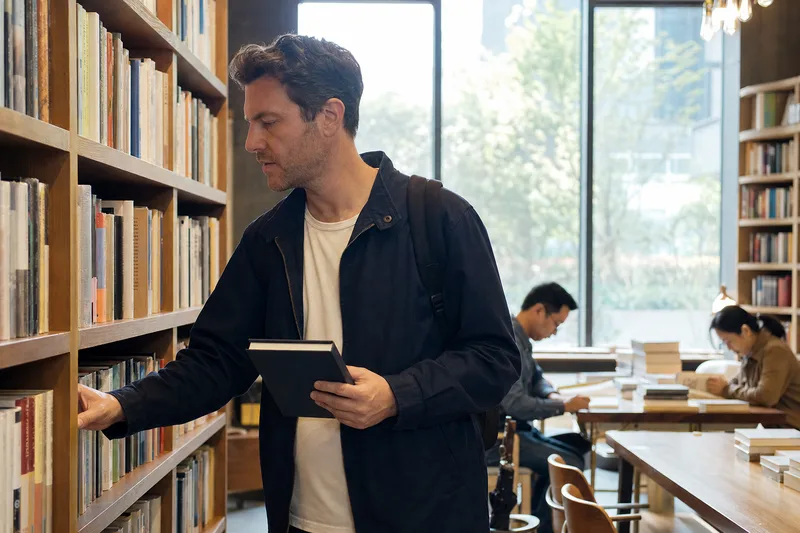
Treat Books and Display Tables Carefully
Some shops welcome customers to open a book briefly, while others keep certain copies wrapped or reserve seating for purchases or cafe guests. Follow signs and staff directions. Use clean, dry hands, return books to the nearest tidy stack or ask staff where they belong, and avoid bending pages or placing bags on display tables.
If a book is shrink-wrapped or displayed in a special case, do not open it without asking. A display copy may be available, but the store’s setup varies. This is especially important for art books, limited editions, magazines, and children’s books.
Read the Room Before Using a Seat
Some bookstores have benches, reading tables, cafe seating, or a small event area. These spaces may be open to everyone, connected to a purchase, reserved for a workshop, or simply full at busy times. Look for signs and observe how local customers use the area before sitting down with luggage or spreading out a map.
Keep phone sound low, use headphones, and avoid taking a call in a quiet reading area. If you need a longer rest, a cafe or clearly marked seating section is usually more appropriate than standing beside a shelf with a large bag.
Take Photos Thoughtfully
Bookstores can have attractive shelves, staircases, windows, and display tables, but photography rules differ. Some shops allow a quick interior photo, while others restrict cameras, tripods, video, or images of particular displays. Look for notices, ask when uncertain, and do not photograph other visitors closely without permission.
Avoid scanning or photographing full pages, illustrated spreads, or large portions of a book. A wider image of the room or your own purchase is usually enough to remember the visit without interrupting readers or creating a copyright concern.
Check Prices and Payment Before Buying
When you find something you want to take home, check that you have the right edition, language, and size before joining the line. Books, stationery, and small gifts can be heavier than they look, so think about your luggage limit and whether the item needs protection in a suitcase.
Payment options can differ by store and counter. Have a charged phone and a backup method ready before checkout. For everyday payment preparation, see how international travelers can pay in China.
Use a Bookstore as a Flexible Travel Stop
A bookstore is a good option during heavy rain, a very hot afternoon, a pause between larger attractions, or a slower arrival day. It works best when you do not turn it into a rushed checklist item. Leave enough time to browse, find the exit, and plan your next transport step.
Save the Chinese store name, mall floor if relevant, and the next destination before you leave. This is useful when the bookstore is inside a large complex with several entrances. For location preparation, read how to prepare Chinese addresses before your trip.
Useful Questions to Save
- Where is the travel, art, or English-language section?
- Do you have a display copy of this book?
- May I sit and read in this area?
- Is photography allowed inside the store?
- How do I pay for this item?
- Which exit is closest to the taxi or ride-hailing pickup point?
Quick Checklist
- Choose a bookstore that fits your time and interest, not only a famous name.
- Browse by visual subject sections when titles are unfamiliar.
- Handle books, wrapped copies, and display tables carefully.
- Observe seating rules before settling in with a bag or phone.
- Follow the store’s photography policy and protect other readers’ privacy.
- Check weight, edition, language, and payment before purchasing.
- Save the Chinese location and your next transport step before leaving.
The Main Point
A Chinese bookstore can be more than a place to buy a book. It can be a quiet window into a city’s everyday cultural life. Browse with curiosity, follow the room’s rhythm, and give yourself enough time to enjoy the visit without treating it like another crowded attraction.