
Shared bicycles can be a useful way to cover a short stretch in a Chinese city: between a metro station and your hotel, along a waterfront, or across a flat neighborhood where walking would take longer than you want. They are not the right answer for every visitor or every route, but a simple daytime ride can be an enjoyable way to see a city at street level.
The key is to keep the first attempt uncomplicated. Bike availability, app access, payment, identity checks, road layout, and parking rules can differ by city and platform. Confirm what works where you are before you rely on a bicycle for a timed plan.
Decide Whether a Bicycle Fits This Journey
A shared bicycle works best for a short, mostly flat route with clear cycling space and a flexible arrival time. It may not be the best option if you are carrying luggage, traveling in heavy rain, unfamiliar with busy traffic, heading to a fixed ticket time, or moving through an area with steep streets and few bike lanes.
Compare the route with walking, metro, and ride-hailing before you unlock anything. For longer cross-city trips, the metro is often easier to follow. This guide covers that option: how to use metro systems in China as an international visitor.
Check Access Before You Need the Bike
Do not wait until you are late to find out whether a local bicycle platform works with your phone, payment method, or account. Download any app you plan to use while you have reliable connectivity, read its current registration requirements, and check that you can see nearby bicycles and the expected unlock flow.
Eligibility, deposits, payment methods, and verification requirements are set by the individual platform and can change. If registration does not work quickly, choose another transport method rather than repeatedly trying to solve it on a busy sidewalk. For general phone-payment preparation, see how international travelers can pay in China.
Choose a Simple Route and Save It First
For the first ride, choose a short daytime route that uses recognizable streets or a protected cycle lane where available. Save the destination in Chinese and look at the route before you start moving. A map may show a direct line that is not comfortable in real traffic, especially near large junctions, station entrances, or construction.
Keep the route visible only when you are safely stopped. Do not try to navigate a map while rolling through a busy street. For address preparation, read how to prepare Chinese addresses before your trip.
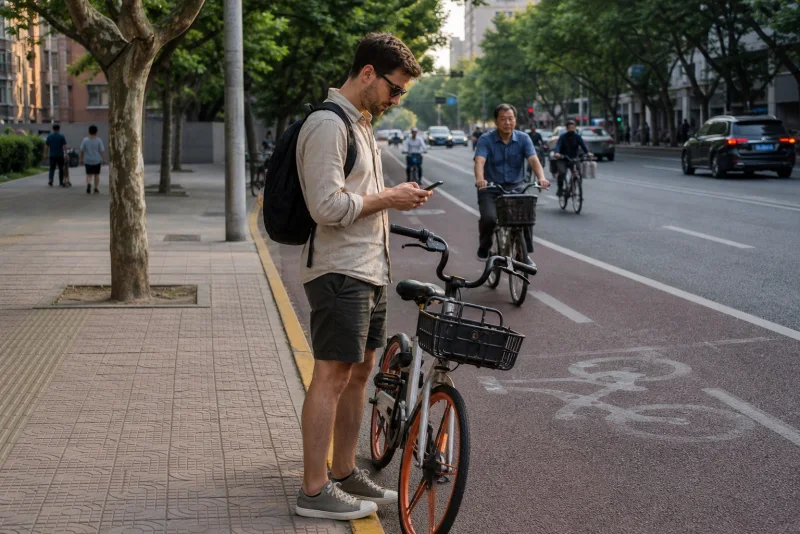
Inspect the Bicycle Before Unlocking
Look over the bicycle in a few seconds before you begin. Check that the tires appear inflated, the handlebars are secure, the seat is usable, the pedals turn freely, and the brakes respond. If the bicycle looks damaged, has a loose chain, or does not unlock correctly, leave it and select another one.
Take a quick note of the bicycle’s identifying information if the app shows it, especially if you need to report a problem. Avoid riding a bicycle that feels unstable simply because it is already unlocked; ending one attempt and choosing another is safer than trying to adapt to faulty equipment.
Ride With the Local Flow, Not Against It
Use designated cycling space where it exists, keep to the expected direction of travel, and follow local traffic lights and markings. Streets can move quickly, and scooters, delivery riders, pedestrians, cars, and buses may all be sharing nearby space. Give yourself more room than you think you need at turns and crossings.
Keep both hands available, avoid headphones that block surrounding sound, and slow down before an intersection instead of making a sudden stop. Do not ride on a sidewalk unless local signs specifically permit it. If a stretch feels too complex, stop somewhere safe and switch to walking or another form of transport.
Park Only Where the City Allows It
Ending a ride is not always as simple as leaving the bike near your destination. Some areas use marked parking zones, digital boundaries, staff-managed rows, or restrictions around transport hubs, entrances, and major sidewalks. Check the app and look for local markings before you lock the bicycle.
Do not block a doorway, tactile paving, ramp, bus stop, narrow footpath, driveway, or a line of already parked bikes. Confirm in the app that the ride has actually ended and keep the confirmation screen until the charge is complete. If the end function fails, follow the platform’s support steps instead of walking away.
Plan for Weather, Phone Power, and a Backup
Rain, heat, poor visibility, and sudden wind can make a short cycling route less comfortable or less safe. Check the conditions before leaving, carry water in warm weather, and avoid turning a bicycle into your only option when rain is expected. A charged phone matters because it may be needed to unlock, end, or report a ride.
Keep a taxi, ride-hailing, metro, or walking fallback in mind. This is especially useful if you cannot find an allowed parking spot close to the destination or if the street layout changes unexpectedly. For a practical backup, see how to take taxis and ride-hailing in China as an international visitor.
Useful Questions to Save
- Can I use a shared bicycle with this account?
- Where is the nearest allowed bicycle parking area?
- Is there a safer cycling route to this address?
- May bicycles use this lane or crossing?
- How do I end the ride correctly?
- Where can I take the metro or a taxi instead?
Quick Checklist
- Use a bicycle only for a short, simple route that suits the weather.
- Check app access and payment before you need to leave.
- Save the route and Chinese destination before unlocking.
- Inspect tires, brakes, chain, pedals, and handlebars.
- Follow signs, lanes, signals, and the local direction of travel.
- Park only in an allowed place and confirm the ride has ended.
- Keep a charged phone and an alternate transport option ready.
The Main Point
Shared bicycles can make a short city journey feel more flexible, but they work best when the route, access, and parking plan are clear before you start. Choose an easy first ride, respect the road and sidewalk, and treat a backup option as part of the plan. Those small decisions make the experience practical rather than stressful.