
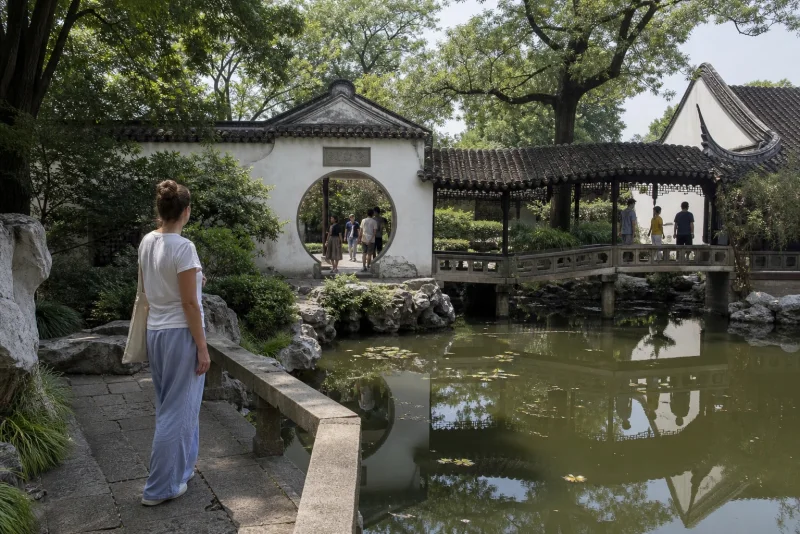
Classical Chinese gardens are made for slow looking. A covered corridor may frame a pond, a moon gate may lead to a smaller courtyard, and a simple rock or window can be part of a carefully arranged view. For a first-time visitor, the pleasure comes less from rushing between landmarks and more from noticing how the garden changes as you move through it.
Each garden has its own size, route, rules, opening pattern, and level of crowding. Some are compact and intimate, while others include museums, former residences, tea spaces, or longer waterside paths. A small amount of planning helps you enjoy the details without treating the visit as a checklist.
Check the Current Entry Rules Before You Go
Look up the official listing or ask your hotel about the garden’s opening hours, ticket process, reservation requirements, bag rules, and any temporary closures. These details can change for holidays, weather, maintenance, special events, or crowd controls. Do not rely on an old travel post for same-day entry conditions.
Save the garden name and address in Chinese, plus the entrance you plan to use. A large historic site can have several gates, and arriving at the wrong one may add an unnecessary walk. This guide can help with general attraction preparation: how to plan museum and popular attraction visits in China.
Choose a Time That Leaves Room to Wander
Early morning or a less busy weekday can make narrow corridors and small viewing points easier to enjoy, but the best time depends on the season and the site’s actual schedule. Leave enough time to move at an unhurried pace, pause when a view opens up, and take a short break if the paths are crowded.
Avoid packing a garden visit tightly between timed tickets in different parts of a city. Gardens reward a flexible hour or two more than a hurried fifteen-minute stop. When weather is uncertain, build in a backup plan rather than assuming every path will be comfortable in rain or heat.
Follow the Route Without Chasing Every Corner
Start with the site map if one is available, then choose a simple loop. In a traditional garden, a path may intentionally turn, narrow, or reveal views gradually. It is fine to miss a small side passage; retracing the same corridor several times in a crowd is rarely more rewarding than pausing at one calm viewpoint.
Keep to the main visitor paths, especially around ponds, rockeries, old steps, and planted areas. Do not climb on stones, sit on fragile railings, or step across a low boundary for a better photograph. Features that look informal may be historic, slippery, or not intended for visitor access.
Let the Garden Set the Pace
Look through doorways and windows before walking through them. Notice the change from an enclosed courtyard to open water, or from a busy corridor to a shaded room. You do not need specialist knowledge of garden design to enjoy the sequence; slowing down is often enough to see how plants, stone, buildings, and water work together.
When a passage is narrow, allow others to pass and avoid stopping directly in a doorway. If you are visiting with companions, regroup at a wider space rather than filling a small bridge or pavilion entrance.
Photograph Thoughtfully
Gardens are popular for photographs, but the site is shared by visitors and staff. Take a moment at a viewpoint, then move on so others can see it too. Avoid using a tripod, changing clothes, bringing large props, or setting up a long portrait session unless the site explicitly permits it.
Keep other visitors out of close-up images when possible, and do not lean over water or cross a barrier for an angle. In interior rooms and exhibition spaces, photography may be limited or prohibited. Follow posted instructions and ask a staff member when a rule is unclear.
Be Prepared for Steps, Weather, and Uneven Surfaces
Stone paths can be uneven, polished by age, or wet after rain. Wear shoes with reliable grip, hold a handrail where provided, and keep one hand free on steep or narrow sections. A garden may be compact on a map but still involve stairs, bridges, and several changes of level.
Bring water in warm weather, an umbrella or light rain layer when appropriate, and a small bag that leaves your hands free. For practical weather planning, see how to plan around weather during a China trip.
Respect Quiet Rooms and Shared Spaces
Some gardens include historic rooms, reading spaces, memorial halls, small exhibitions, or tea areas. Lower your voice, silence phone audio, and follow any rules about shoes, food, drinks, and seating. Do not treat a quiet room as a shortcut, a changing space, or a place to rest large bags.
Where a garden borders homes or a residential neighborhood, be especially mindful of noise and privacy. A respectful visit is often simple: stay on the intended route, keep conversations low, and leave the space as you found it.
Plan the Next Stop Before Leaving
Before you exit, check where you will meet a taxi or ride-hailing car, which gate leads toward the metro or bus, and whether you need a restroom or water refill first. Large sites may direct vehicles to a different pickup area from the entrance you used.
Save the next destination in Chinese before your signal becomes unreliable in a historic interior or underground station. For practical pickup guidance, read how to take taxis and ride-hailing in China as an international visitor.
Useful Questions to Save
- Where is the correct entrance for visitors?
- Do I need a reservation or ticket today?
- Is there a recommended route through the garden?
- Is photography allowed in this room?
- Where is the nearest restroom or water point?
- Which exit is best for the metro or taxi pickup?
Quick Checklist
- Check current hours, ticket rules, and temporary notices.
- Save the Chinese name, address, and intended entrance.
- Leave enough time for a relaxed loop rather than a rushed stop.
- Stay on visitor paths and take care on stone, steps, and bridges.
- Share narrow viewpoints and keep doorways clear.
- Follow photography rules and protect other visitors’ privacy.
- Plan the next transport step before you leave the site.
The Main Point
Classical Chinese gardens are not places to conquer quickly. They are designed around changing views, small details, and moments of calm. Check the current rules, move carefully, give others space, and let the garden reveal itself one turn at a time.