
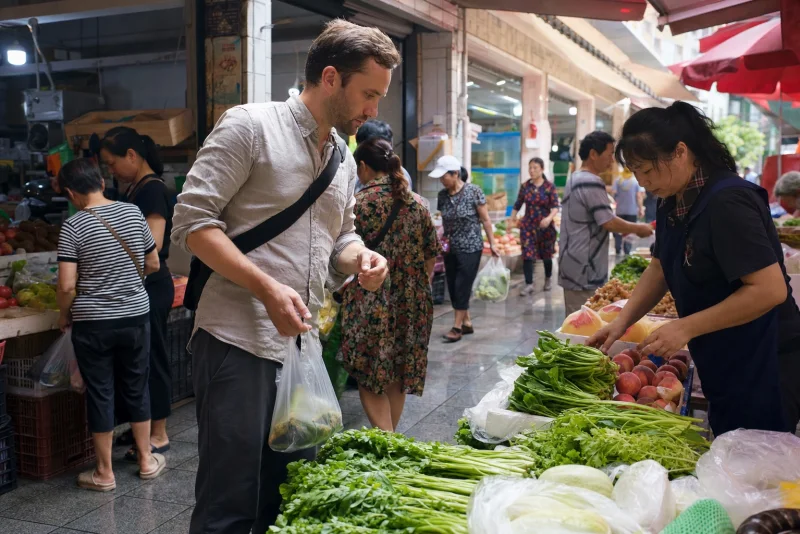
A Chinese morning market can be one of the most vivid everyday stops on a trip: leafy vegetables arriving in crates, fruit stacked by season, breakfast stalls opening, and neighbors choosing ingredients for the day. It is not a staged attraction, so the best visit is built around observation, patience, and respect for people who are there to shop and work.
Markets differ by city and neighborhood. Some are covered indoor halls, some are open-air lanes, and some combine produce, cooked food, household goods, and small services. You do not need to make a purchase to enjoy the experience, but a little preparation makes the visit smoother for both you and the vendors.
Choose a Market and Time That Fit Your Day
Search for a neighborhood produce market or morning market near your hotel rather than traveling across a city only for a famous name. The useful part of the visit is seeing local routines, and a nearby market is easier to leave when it becomes crowded or your next reservation approaches.
Go in the morning, but check the current opening pattern with your hotel or a local map service. The busiest time, stock levels, and closing hour vary widely. Wear shoes that are comfortable on wet floors, keep valuables secure, and leave large luggage at the hotel.
Start by Watching How the Market Works
Take one slow walk through the market before stopping at a stall. Notice where people queue, where payment happens, and which areas are narrow or busy. A produce counter may price goods by weight, by a small bag, or by a visible portion. Other stalls may have a fixed price displayed only in Chinese.
Keep to the side when you pause to look at a display, and do not block a scale, a cart lane, or the entrance to a stall. This makes it easier for regular shoppers to move through their morning routine.
Ask Before Touching or Choosing Produce
Some vendors expect customers to select produce themselves, while others prefer to choose and bag it for you. Watch local customers first. If you are uncertain, point politely, ask the price, and let the vendor show you what to do. Avoid squeezing fruit, sorting through piles, or opening bags unless the stall’s normal practice is clear.
Save a short note on your phone with the item you want, the quantity, and any food allergies. A photo of the ingredient can be useful, but do not assume every ingredient is familiar. This companion guide can help with dietary planning: how to prepare for food allergies and dietary restrictions during China travel.
Confirm Price, Quantity, and Weight Before Paying
When you want to buy something, confirm the price before it is bagged. A calculator screen, a written number, or a translation app can make a small exchange clearer. If an item is sold by weight, watch the scale and make sure you understand whether the displayed amount is the final total.
Buy a modest amount if you are not sure how you will carry or use it. Fresh produce, sauces, and breakfast foods can be difficult to protect in a suitcase, and some items may not be suitable to take through later transport or across a border.
Prepare Payment Without Holding Up the Queue
Payment habits vary by stall. QR payments are common in many markets, but a vendor’s preferred method, card acceptance, or change available can differ. Have your phone charged, your payment app ready, and a backup method available before you reach the front of a busy stall.
Do not assume a payment method used in one city will work identically in another. For wider preparation, read how international travelers can pay in China.
Photograph the Market, Not People at Close Range
A market can be visually rich, but it is also a workplace. Take a wide photo only when it does not obstruct a path, and ask before taking a close photo of a vendor, a customer, or a stall’s goods. Do not use a tripod, a bright light, or a long video setup in a narrow aisle.
Put the phone away when you are making a purchase. A short, attentive exchange is more respectful and usually faster than filming or translating while a line is waiting behind you.
Use Good Food and Hygiene Judgment
Enjoy the market as a cultural experience, but make food choices with the same care you would use anywhere while traveling. Choose cooked food that is being served hot, use busy stalls as one practical sign of turnover, and avoid tasting unwashed produce or unfamiliar raw items on impulse.
Carry hand sanitizer or wash your hands before eating. If you buy fresh food, keep it separate from other belongings and return it to your accommodation promptly. When in doubt about an ingredient or preparation method, choose something you can identify clearly.
Leave the Market Considerately
Keep purchases in a secure bag, dispose of rubbish properly, and avoid leaving wet packaging or food scraps on a counter. If you have bought something fragile, protect it before getting into a taxi, metro, or bus. Save the market name and your next destination in Chinese before you leave.
For a simple next-step transport plan, see how to take taxis and ride-hailing in China as an international visitor.
Useful Questions to Save
- How much is this?
- Is this sold by weight or by bag?
- Could I have a smaller amount, please?
- May I choose these myself?
- How do I pay here?
- May I take a photo of the stall?
Quick Checklist
- Choose a nearby market and check its current morning hours.
- Walk through once before stopping at a stall.
- Watch whether customers select their own produce.
- Confirm price, quantity, and weight before payment.
- Keep your phone charged and payment method ready.
- Ask before close photographs and keep aisles clear.
- Use sensible food hygiene and carry fresh purchases carefully.
The Main Point
A Chinese morning market is most rewarding when you treat it as part of everyday city life rather than a performance. Go early, watch first, make small and clear purchases when you want to, and leave space for the people who use the market every day. Those simple habits turn a busy visit into a relaxed and respectful experience.