
City buses can be useful in China when a metro station is not close to your destination, when you want to stay above ground, or when a short ride connects two nearby parts of a city. They can also be less forgiving than the metro for a first-time visitor: route numbers, stop names, payment methods, traffic, and last-bus times all depend on the particular city and line.
The best first bus ride is a simple one. Choose a short daytime route, confirm the destination and stop in Chinese, and keep a backup plan ready if the route does not look right. Once you understand the local rhythm, buses can become a practical addition to walking, rail, and ride-hailing.
Decide Whether a Bus Fits This Journey
A bus is most useful when it saves a long walk, connects places outside the nearest metro line, or gives you an easier route between two nearby areas. It may not be the best option when you are carrying heavy luggage, trying to make a fixed ticket time, arriving very late, or navigating a city for the first time in heavy rain.
Before leaving, compare the bus route with walking, metro, and ride-hailing. For many first-time visitors, the metro is easier for longer cross-city trips because the route structure is more visible. This guide covers the metro side: how to use metro systems in China as an international visitor.
Save the Exact Stop Names in Chinese
Do not rely only on a hotel name or a broad neighborhood label. Save the Chinese name of the boarding stop, the destination stop, and the final destination address. A bus route can pass several places with similar English descriptions, and the stop you need may be on the opposite side of a large road.
Check the direction as well as the route number. A bus using the same number can travel in opposite directions from different sides of the street. A route map, local transport app, or the stop display can help, but confirm the destination before you board. For address preparation, read how to prepare Chinese addresses before your trip.
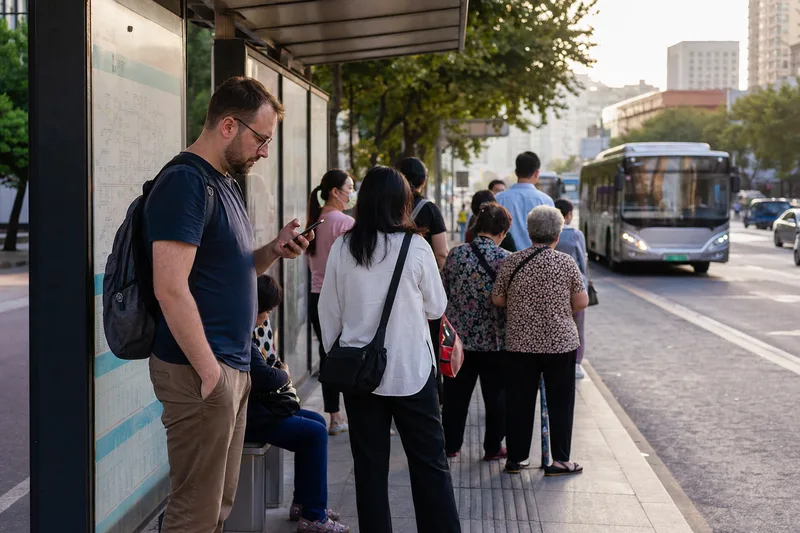
Observe the Stop Before the Bus Arrives
At a busy stop, watch where people wait and how they line up. Stand clear of the curb until the bus slows down, keep bags close, and let passengers exit before moving toward the door. Do not assume every approaching bus will stop unless it serves your route and the driver has seen waiting passengers.
When you are unsure, show the Chinese destination stop or route number to a nearby staff member or passenger before boarding. A short question at the stop is easier than trying to solve the route after the bus has pulled away.
Confirm Payment Before You Commit to the Ride
Bus payment systems differ by city and sometimes by vehicle. A route may use a local transit card, an in-app code, a QR payment method, cash, a ticket machine, or another local process. Do not assume the payment method that worked in one city will work the same way in the next.
Look for the payment point when you board and follow the posted instructions. If your phone payment is not ready, choose a simpler transport option rather than delaying a crowded bus. For wider daily-payment preparation, see how international travelers can pay in China.
Make the Ride Easy on Yourself and Others
Move away from the door after boarding if the bus is busy, keep luggage compact, and hold a rail when standing. Give priority seating and open aisle space to passengers who need it. Avoid blocking the front area with a suitcase or stopping in the doorway while checking a map.
Use headphones, keep phone calls short, and prepare your exit before the bus reaches the stop. On a moving vehicle, it is easier to manage bags, tickets, and a phone when everything you need is in one small, accessible pocket.
Track the Stop Without Relying on One Signal
Watch the route on your phone, the on-board display if available, and the streets outside. Do not wait until the last second to decide whether this is your stop. If the bus uses a stop-request button or another signal, follow the local signs and watch what other riders do.
Move toward the exit only when it is safe, and keep clear of passengers boarding at the next stop. If you miss the stop, get off at a safe later stop and reset the route rather than trying to leave in a hurry.
Check Late Travel and Have a Backup
Late-evening frequencies and last-bus times vary, and they can change for weather, holidays, maintenance, or local traffic conditions. Check the current route information on the day instead of relying on a general timetable found weeks earlier.
Save a ride-hailing or taxi backup for an evening when the bus is delayed, the stop is difficult to find, or the journey has become too complex. This guide explains the practical basics: how to take taxis and ride-hailing in China.
Useful Questions to Save
- Does this bus go to this stop?
- Which side of the road should I board from?
- How do I pay for this bus?
- Could you tell me when we reach this stop?
- Where should I get off for this address?
- Is there another bus or metro route for this journey?
Quick Checklist
- Use a short daytime route for your first bus ride.
- Save the boarding stop, destination stop, and address in Chinese.
- Confirm both the route number and travel direction before boarding.
- Watch the local payment method at the entrance.
- Keep bags compact and doors clear.
- Track the route and prepare for the exit before the stop.
- Check current late-travel information and keep a taxi backup.
The Main Point
City buses work best when you keep the first ride simple and prepare the route before you reach the stop. Save the Chinese names, check the direction, confirm payment, and know what you will do if the plan changes. Those small steps make a local bus feel manageable rather than uncertain.