
Updated on June 5, 2026. Clear communication with local drivers and guides can make a China trip feel much easier. Most problems are not dramatic: a hotel has two entrances, a railway station has several exits, a flight arrives late, a traveler cannot find the pickup point, or a driver receives only an English hotel name that does not match the local address.
This guide explains how international travelers can prepare for driver and guide communication in China. It focuses on practical travel flow: airport pickup, hotel arrival, high-speed rail stations, daily guide meetings, translation apps, itinerary changes, and official support channels. It is not a language lesson and it is not a substitute for emergency services, airline rules, hotel policies, or official travel advice.
The basic principle is simple: prepare information in a format local people can actually use. A clear Chinese address, a saved phone number, a photo of a meeting point, a short message, and an official support contact can solve more problems than a long explanation in English.

Start with the information a driver or guide needs
A local driver or guide usually does not need your whole travel story. They need the facts that affect the next handover. For airport pickup, that means flight number, arrival date, terminal, expected landing time, passenger name, luggage count, and the agreed meeting point. For hotel transfer, it means hotel Chinese name, full Chinese address, phone number, and the correct entrance if there is more than one.
For a daily guide meeting, the key details are date, meeting time, hotel lobby or exact entrance, traveler name, group size, walking pace, tickets or passport needs, and any food, mobility, or timing concern that affects the day. Keep this information short and written down.
If you have not prepared offline information yet, read our offline China travel checklist. It explains how to save passport copies, hotel addresses, transport details, payment backups, insurance information, and official support contacts before departure.
Use Chinese addresses, not only English names
Many China travel communication problems start with addresses. English hotel names are often translated differently across booking sites, map apps, emails, and taxi systems. A driver may know the Chinese district and road name but not the English version of the hotel brand. A guide may need to confirm a specific hotel entrance rather than the general property name.
For each hotel and station, save:
- English name.
- Chinese name.
- Full Chinese address.
- Phone number.
- Nearest entrance, lobby, gate, or exit if known.
- A map screenshot or location pin as a backup.
This is especially important after a long flight, when you may be tired and mobile internet may not be fully working yet. Our China hotel check-in guide explains why hotel names, passport registration, late arrival, and front desk communication should be prepared before travel.
Airport pickup: confirm the meeting point before landing
Airport arrival can be confusing because the traveler, driver, and support team are all working with partial information. A traveler may clear immigration slowly, luggage may be delayed, the driver may wait in a designated area, and the airport may have separate domestic, international, parking, and ride-hailing zones.
Before departure, confirm three things in writing: who is meeting you, where they will wait, and what happens if the flight is delayed. If a pickup card is used, confirm the exact name on the card. If WhatsApp, WeChat, SMS, or phone calls are used, confirm which channel is official for travel day communication.

If your arrival time changes, do not wait until landing to update everyone. Send the changed flight number, expected arrival time, and new terminal if available. Our guide on what to do if your flight to China is delayed, changed, or arrives late explains how to protect the first transfer and hotel check-in plan.
High-speed rail stations need exact station names
Large Chinese cities often have several railway stations. The station name matters as much as the train number. For example, a city can have a central station, south station, west station, north station, airport-area station, or a newer high-speed rail station far from the old downtown station.
When communicating with a driver or guide around rail travel, save and share the Chinese station name, train number, departure or arrival time, and the agreed exit or meeting point. Do not say only “the train station.” A driver picking you up from the wrong station may not be able to reach the correct one quickly.
For first-time travelers, our China high-speed rail ticket and station guide gives more detail on station names, real-name ticket checks, waiting halls, boarding, exits, and common timing issues.
Use translation apps carefully
Translation apps are useful, but they work best with short, plain sentences. Avoid idioms, jokes, long paragraphs, slang, or emotional explanations. Instead of writing “We are completely lost and the app is not making sense,” write “We are at Exit B. We need to go to Grand Hotel lobby. Can you call the driver?”
Good travel messages are short:
- “We have landed and are waiting for luggage.”
- “We are at Exit 3. Please confirm the pickup point.”
- “Our hotel address is below. Please take us to this address.”
- “We need 10 more minutes. One suitcase is delayed.”
- “Please call the hotel front desk.”
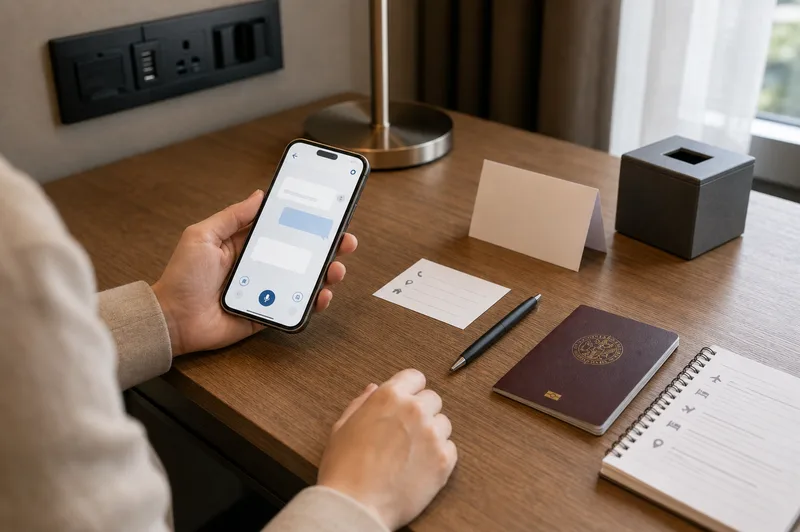
Because translation apps and map apps depend on phone access, also prepare mobile internet before travel. Our China SIM card, eSIM, and internet access guide explains why travelers should not assume full connectivity immediately after arrival.
Keep changes in the official communication channel
Small travel changes happen: a flight is delayed, a traveler feels tired, a hotel room is not ready, traffic is slower than expected, or the group wants to adjust the pickup time. The key is to keep important changes traceable. Do not rely only on a quick spoken agreement with a driver if the change affects booking cost, timing, tickets, hotel check-in, or the next day’s plan.
If Jiangmi Travel is supporting your trip, use the official channel agreed before travel. The driver or guide may help on the ground, but official confirmation should still go through the support path when the change affects service scope, timing, or payment. This protects the traveler, driver, guide, and service team from misunderstandings.
For payment and confirmation issues, read what to confirm before paying for a China trip. For company and official-channel verification, read how to verify a China travel company before booking.
Food, pace, and comfort should be communicated early
Drivers and guides can help more when they know practical needs in advance. Tell the support team about vegetarian meals, food allergies, senior traveler pace, wheelchair or mobility needs, children, large luggage, early bedtime, or a preference for shorter walking segments. These details are not “too small.” They affect timing, route choice, vehicle choice, restaurant suitability, and rest breaks.
For senior travelers and families, communication should be more conservative. A guide can adjust walking pace or meeting time more easily before the day starts than after everyone is already tired in a crowded station or attraction entrance.
Three practical examples
- Example 1: airport arrival in Beijing. The traveler sends the flight number, landing update, luggage delay note, and pickup point message through the official channel. The driver waits at the correct area instead of guessing from the original schedule.
- Example 2: hotel transfer in Shanghai. The traveler shows the Chinese hotel name, full Chinese address, and phone number. The driver confirms the correct branch and entrance before leaving the station.
- Example 3: guide meeting in Xi'an. The guide confirms the hotel lobby, meeting time, traveler name, group size, and walking pace the night before. The next morning starts without repeated calls or uncertainty.
Driver and guide communication checklist
- Save Chinese names and addresses for all hotels, stations, and meeting points.
- Confirm airport pickup card name, meeting point, and delay procedure before travel.
- Save train numbers, station names, arrival times, and exit details for rail transfers.
- Use short, plain messages in translation apps.
- Prepare mobile internet, but keep offline screenshots as backup.
- Share food, pace, mobility, luggage, and family needs before the service day.
- Keep booking changes in the official support channel when they affect timing, scope, or cost.
Clear communication is not about speaking perfect Chinese. It is about giving local drivers, guides, hotels, and support teams the right information in the right format. If you want Jiangmi Travel to review the communication plan for airport pickup, hotel transfer, high-speed rail stations, or local guide meetings, use the official contact page.